Adnan
July 2026
Thank you,Dr Koh, for the excellent dental implant treatment.The whole process was well explained,smooth and comfortable.Im very pleased with the results and would definitely recommend this clinic to others
View on Google
Deep scaling, gingivectomy, crown lengthening and gum grafting to treat gum disease and keep it stable, with maintenance every three to four months.
Periodontal treatment looks after the gums and the bone that hold your teeth. Gum disease starts as bleeding, swollen gums (gingivitis) and can progress to periodontitis, where the bone around the teeth is lost and teeth loosen. Treatment ranges from deep scaling below the gum line to gum surgery such as gingivectomy, crown lengthening and gum grafting, followed by regular maintenance visits to keep the disease under control.

Every tooth is measured and bone levels checked on X-rays.
Pockets are measured again to see how the gums responded.
Keeps treated gum disease stable.
Gum disease is usually painless, so it is often found at a check-up.
Not every option suits every patient. We confirm the right one at your examination and explain it before anything starts.
Explore the options. The plan is tailored to your case.

Cleaning below the gum line under local anaesthesia to remove tartar and bacteria from the pockets, usually one side or quadrant per visit.
Precise surgical removal of diseased gum tissue to eliminate deep pockets, treat infection, and reshape your gum line.
Reshaping gum and bone tissue to expose more of the natural tooth, ideal for restorative needs or correcting a "gummy" smile.
A microsurgical technique utilizing healthy tissue to cover receding gums, actively preventing further root exposure and bone loss.
What happens at each stage.
Charting first, then treatment over two to four visits, re-evaluated at six to eight weeks, then maintenance every three to four months for as long as the teeth are there.
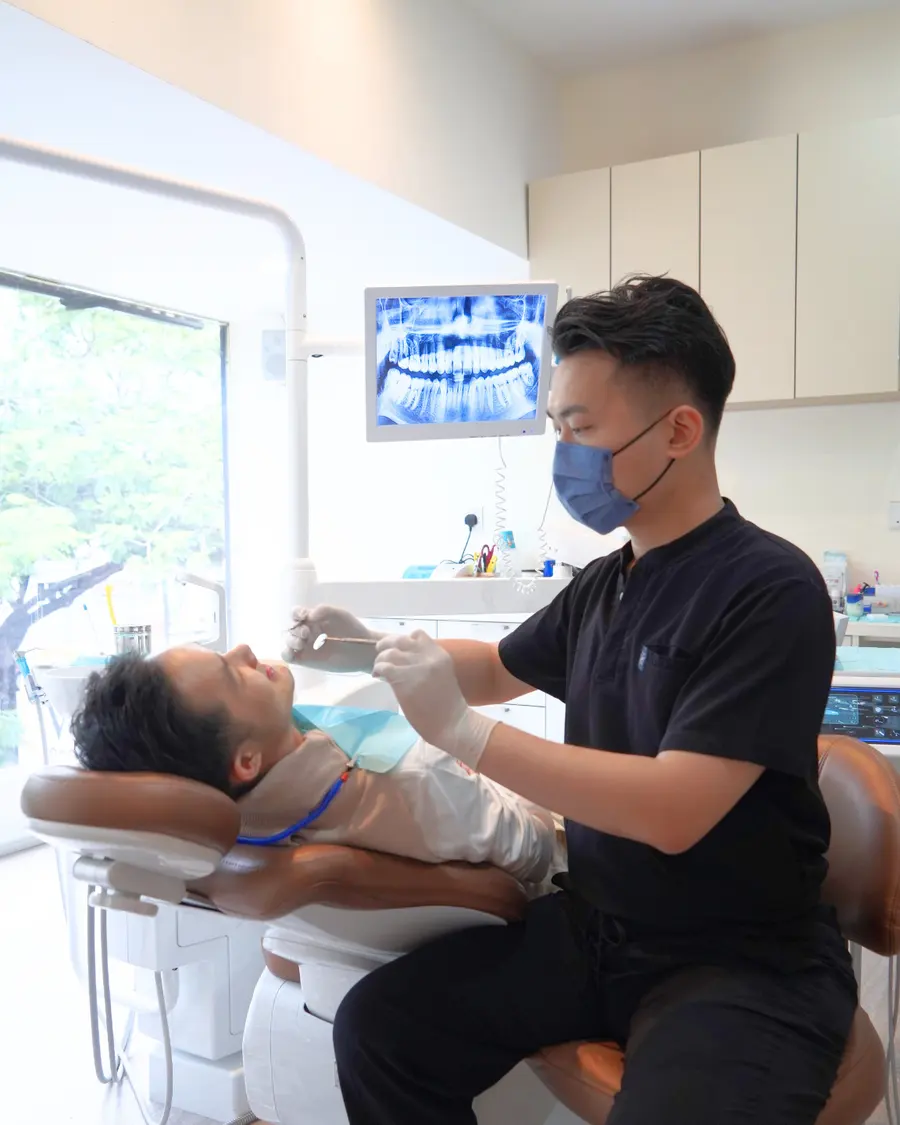
Pocket depths are measured around every tooth and X-rays show the bone levels.
Cleaning technique is tailored to you, and plaque and tartar above the gum line are removed.
Tartar and bacteria below the gum line are removed under local anaesthesia, usually one quadrant or one side per visit.
Six to eight weeks later the pockets are measured again to see how the gums have responded.
Deep pockets that persist are treated with further cleaning or a small gum-flap procedure. Gum overgrowth is treated with gingivectomy, a tooth broken below the gum with crown lengthening, and exposed roots with gum grafting.
Professional cleaning and pocket checks every three to four months help keep the disease stable.
The re-evaluation at six to eight weeks is the point of the whole exercise. Pockets are measured again against the first chart, and that comparison decides whether the gums responded, whether surgery is worth considering, and how often you need to be seen from then on.
The practical things patients ask about.
Gums feel tender and may bleed a little when brushed. Teeth can be sensitive to cold, because tartar that was insulating the root has been removed. A desensitising toothpaste used consistently settles this for most people.
Bleeding on brushing reduces markedly if the cleaning at home is going well. Gums tighten and shrink back slightly onto the healthier tissue underneath, which is a sign of healing rather than of damage.
Re-evaluation. Every pocket is measured again and compared against the first chart. Sites that have responded go onto maintenance, sites that have not are considered for surgery.
Maintenance. Periodontitis is controlled rather than cured, and the interval is set by how your gums behaved, not by a standard six months.
Longer or blacker triangles between the teeth after treatment are the gum tightening onto healthier tissue, not the treatment causing harm. Call us if a tooth becomes newly loose or painful to bite on, if an area swells, or if bleeding continues unchanged after four weeks of good cleaning.
Fees are quoted per case. These factors move the figure.
How many quadrants or teeth need deep scaling, and how deep the pockets are.
Whether surgery is needed, and which procedure: gingivectomy, crown lengthening or gum grafting.
Graft material or membranes used in grafting procedures.
The maintenance interval you need afterwards.

A written plan and fee breakdown follows the periodontal examination and charting. Payment plans are available for larger treatment plans.
Book a consultation or message us on WhatsApp. We explain your options and give a written plan before any treatment begins.
Three stages of the same treatment rather than three alternatives. Which one you need is decided by how deep the pockets are and how much bone has already been lost.
| Scaling and polishing | Deep scaling and root planing | Gum surgery | |
|---|---|---|---|
| Pocket depth | Up to about 3 mm, healthy | About 4 to 6 mm | Deeper than about 6 mm, or pockets that did not respond |
| What it treats | Plaque and tartar above the gum line | Tartar and bacteria on the root surface below the gum line | Pockets the instruments cannot reach cleanly, and bone contours that trap plaque |
| Anaesthetic | Not usually needed | Local anaesthesia, usually one side or quadrant per visit | Local anaesthesia |
| Visits | One, at your check-up | Two to four | One or more, after the re-evaluation |
| Afterwards | Nothing beyond normal brushing | Tender gums and cold sensitivity for a week or so | Stitches, a soft diet and a review at about a week |
| What it will not do | Reach anything below the gum line | Regrow bone that has already been lost | Regrow bone that has already been lost, in most situations |
The bone lost before treatment does not come back. What treatment does is stop the loss and keep what is there, which is why the timing of the first visit matters here more than almost anywhere else in dentistry.
Open a topic for the full explanation.
Periodontal treatment is for gums that bleed, look red or swollen, or have pulled away from the teeth. It is also for bone loss around the teeth, which shows as loose or drifting teeth and deep pockets at a check-up. Smokers and people with diabetes are at higher risk and often need closer follow-up. Gum disease is also treated and stabilised before implants, braces or cosmetic work.
Smoking is the strongest modifiable risk factor for gum disease. It constricts the blood supply to the gum, which both accelerates the bone loss and masks it, because a smoker's gums bleed less than the inflammation underneath would suggest. That means the disease is often further along than it looks. Smokers also respond less well to both scaling and surgery. None of that is a reason to withhold treatment, it is a reason to see you more often and to be honest with you about what the treatment can achieve.
Diabetes runs in both directions with gum disease. Poor glycaemic control makes periodontitis worse, and active periodontitis makes blood glucose harder to control. Treating the gums is a genuine part of managing the diabetes, not a side issue, and we may ask for a recent HbA1c so that expectations and the recall interval are set realistically.

V Dental Clinic in SS2, Petaling Jaya provides periodontal treatments with clear explanations, careful planning and follow-up at every step.
A detailed treatment plan and fee breakdown before treatment begins.
Strict sterilisation and hygiene protocols for every visit.
755+ Google reviews from our patients. Read them on Google.
Conveniently located in SS2, Petaling Jaya.
Before and after cases treated at our clinic, and what patients say on Google.
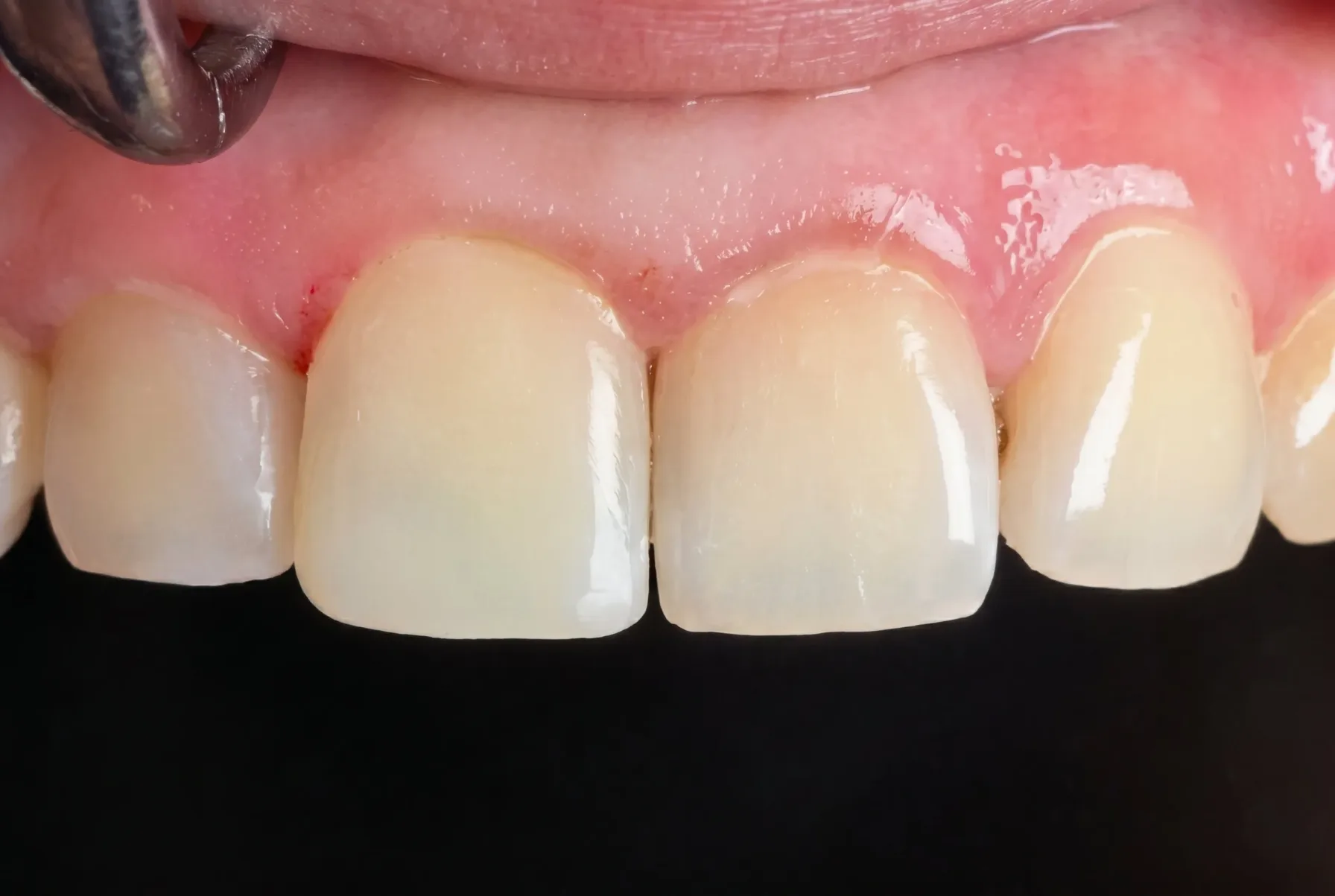
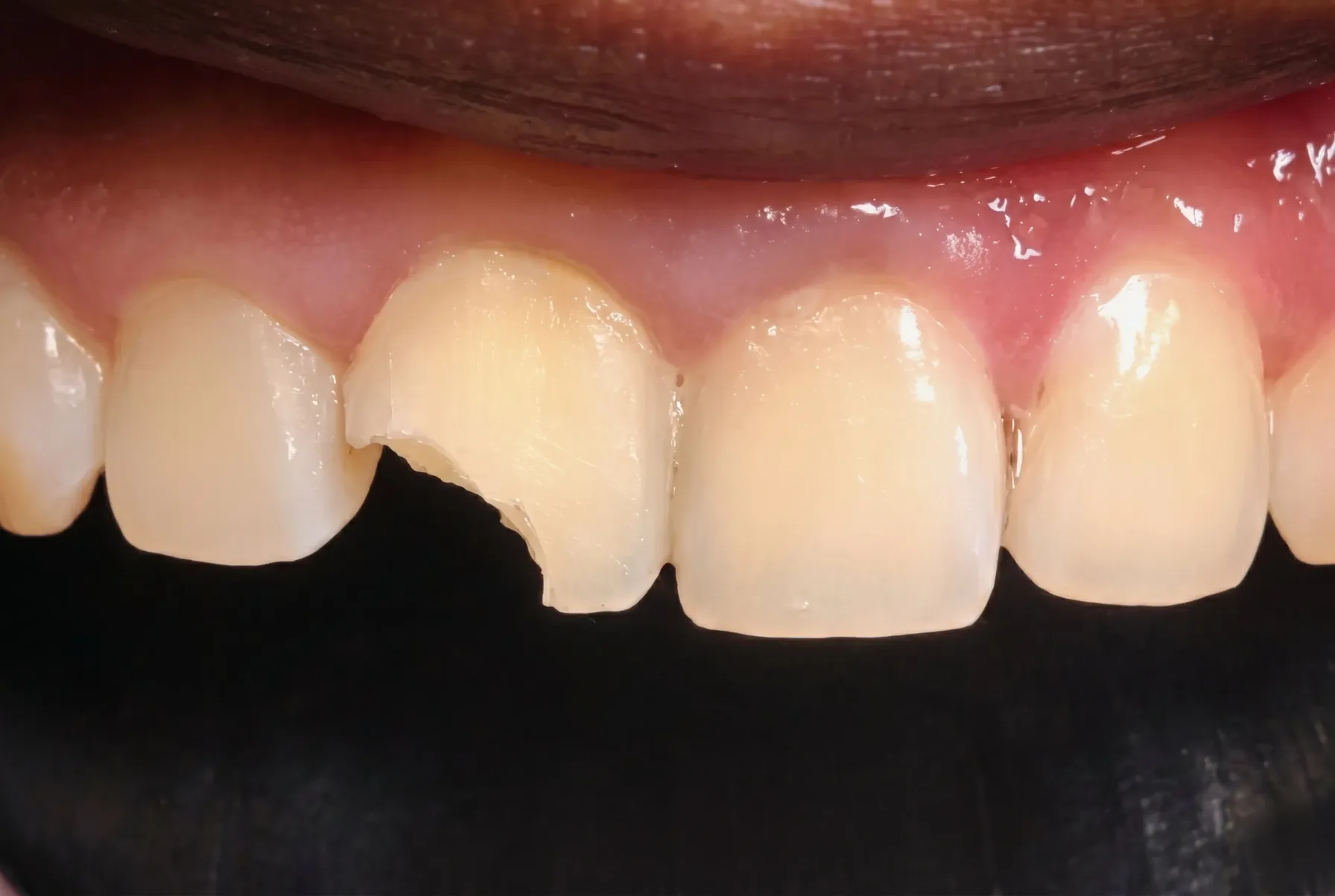
Restoring huge chipped tooth with aesthetic filling.
out of 5 on Google
Based on 755+ reviews
Adnan
July 2026
Thank you,Dr Koh, for the excellent dental implant treatment.The whole process was well explained,smooth and comfortable.Im very pleased with the results and would definitely recommend this clinic to others
View on GoogleSummer Lee
June 2026
The doctor was very good, patient, and professional. I went for braces treatment and had a great experience. The doctor explained everything clearly and made me feel comfortable throughout the consultation. Highly recommended!
View on GoogleNick Koay Han Yann
June 2026
Recommended by one of my relatives, Dr Koh is very friendly and informative. Did my scaling and filling. No issue, had a good experience.
View on GoogleEverything you need to know about this treatment.
Bleeding when brushing or flossing, red or swollen gums, persistent bad breath, gums pulling away from the teeth, and loose or drifting teeth. Gum disease is usually painless, which is why it is often found at a check-up rather than noticed at home.
Cleaning of the tooth roots below the gum line to remove tartar and bacteria from the gum pockets. It is done under local anaesthesia, often one side or one quadrant of the mouth per visit, and the gums are reviewed six to eight weeks later to see how the pockets have responded.
Gingivitis, the early stage, is reversible with cleaning and good home care. Periodontitis, where bone has been lost, can be controlled but not reversed: treatment stops further loss and the condition is then kept stable with maintenance visits every three to four months.
Removal of excess or diseased gum tissue. It is used to eliminate deep pockets that do not respond to cleaning, to remove gum overgrowth, or to reshape the gum line in a gummy smile. It is done under local anaesthesia and heals in one to two weeks.
A procedure that reshapes the gum and sometimes the bone to expose more of the tooth. It is done when a tooth is broken or decayed below the gum and needs a crown, or to correct a gummy smile. The gum heals for at least six to eight weeks before a crown is made, and three to six months for front teeth, where the gum line must settle before the final crown.
Covering exposed roots or thickening thin gum with a small piece of tissue taken from the roof of the mouth or a donor tissue product. It protects the root from sensitivity and further recession. The graft site heals in about two weeks, with the final result visible after a few months.
Yes. Untreated gum disease raises the risk of infection and bone loss around implants, so it is treated and stabilised before implants are placed. Gum disease is also associated with diabetes control and heart health, which is another reason to treat it.
Treatments that commonly come up alongside this one, either as an alternative or as the step before or after.

Walk-ins are welcome, but an appointment keeps your waiting time short.
Opening hours
Mon to Sat: 9:00 AM to 9:00 PM (MYT)
Sun: 9:00 AM to 6:00 PM (MYT)