Adnan
July 2026
Thank you,Dr Koh, for the excellent dental implant treatment.The whole process was well explained,smooth and comfortable.Im very pleased with the results and would definitely recommend this clinic to others
View on Google
Acrylic, flexible and suction dentures made over three to five visits in SS2, with a wax try-in and adjustments until they sit comfortably.
Dentures replace missing teeth with a removable appliance made to fit your gums. A partial denture fills gaps between remaining teeth. A complete denture replaces all the teeth in an arch. We make conventional acrylic dentures, lightweight flexible dentures without metal clasps, and suction dentures, a technique for lower complete dentures that can improve stability in suitable cases without implants. Dentures are made over several visits and adjusted until they sit comfortably.
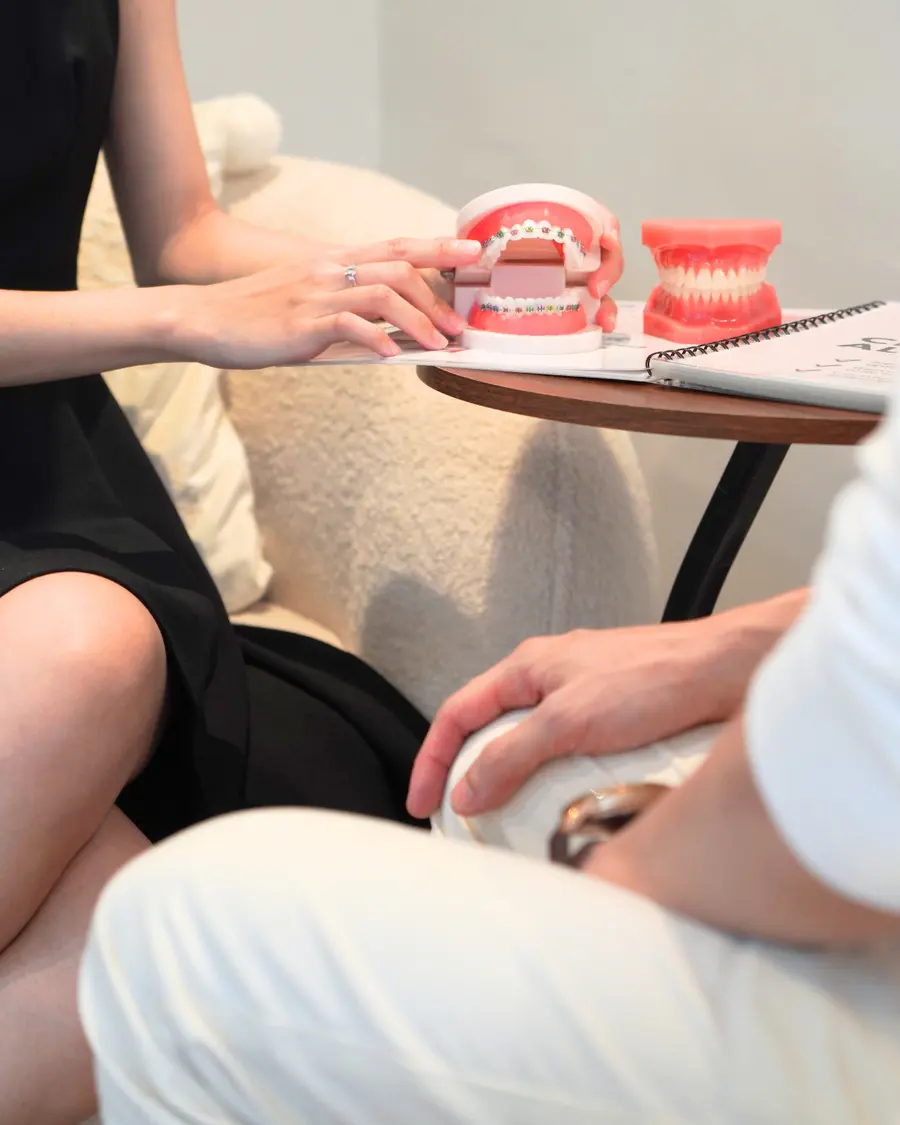
Over two to four weeks, including a wax try-in.
Chosen for your gums, remaining teeth and budget.
Sore spots are relieved at review visits until the fit is comfortable.
A removable option for one tooth, several teeth or a whole arch.
Not every option suits every patient. We confirm the right one at your examination and explain it before anything starts.
Explore the options. The plan is tailored to your case.
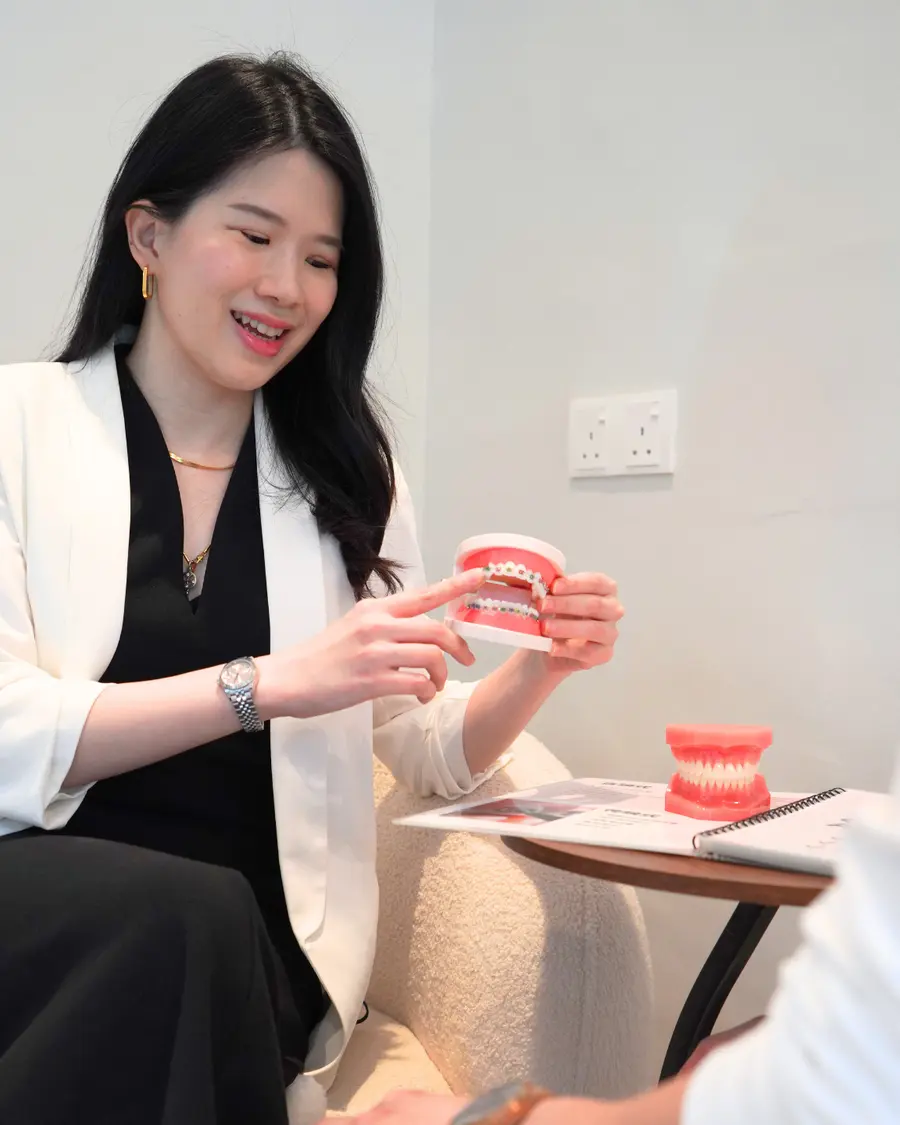
A reliable, traditional and cost-effective restorative base crafted to replace missing teeth with dependable support.
A lightweight, completely metal-free alternative that subtly contours and adapts dynamically to the unique motion of your gums.
An innovative, tightly fitting lower denture technology that uses natural suction to reduce displacement.
What happens at each stage.
Three to five visits over two to four weeks, including a wax try-in where you see the teeth and approve them before anything is finished.
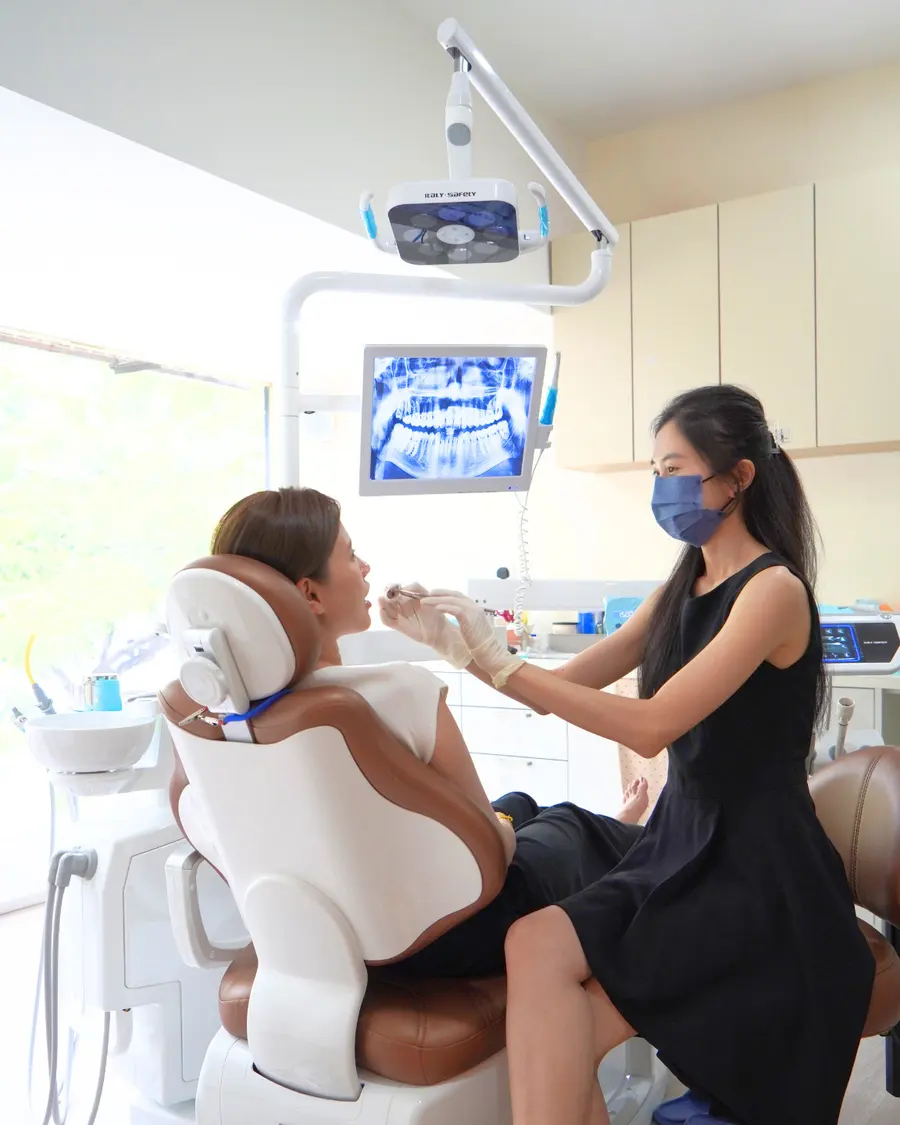
Remaining teeth, gums and bone are examined, with an X-ray, and the type of denture is agreed.
A first impression, then a more accurate one, usually in a tray made for your mouth.
The bite is recorded and the shade, shape and size of the teeth chosen with you.
The teeth set in wax are tried in to check fit, bite, speech and appearance before the denture is finished.
The finished denture is fitted and fine-tuned at one or two follow-up visits.
The wax try-in is the visit that matters. The teeth are still set in wax and can be moved, so the shade, the length and how much they support the lip are all changeable at that point and considerably harder afterwards. Bring someone whose opinion you trust.
The practical things patients ask about.
A new denture feels far too big, saliva increases and speech is affected. All three are the mouth adapting rather than the denture being wrong. Read aloud for a few minutes a day, which speeds the speech up more than anything else.
Sore spots appear where the denture presses. These are normal and they are adjusted at review visits in a couple of minutes each. Eating gets easier as the tongue and cheeks learn to hold the denture in place, which is a skill rather than a fit.
The denture feels like part of you and most foods are back. Where teeth were extracted first, the gum is still shrinking underneath and the fit loosens, which is why a first reline is common around this point.
Gum and bone keep changing slowly for as long as the teeth are missing. A reline every couple of years and a remake every five to eight years is the normal pattern, not a sign anything has gone wrong.
Do not adjust a denture yourself with a file or a blade. A sore spot is relieved by removing a fraction of a millimetre in exactly the right place, and taking material off the wrong place cannot be undone. Leave the denture in for a few hours before a review visit even if it is sore, because the ulcer shows us precisely where to adjust and it disappears if the denture has been out all day.
Fees are quoted per case. These factors move the figure.
Partial or complete denture, and the number of teeth and clasps.
Acrylic, flexible, or the suction denture method.
Whether an immediate denture and later relines are part of the plan.
Repairs, relines and replacements over the life of the denture.

A written quote follows the examination and covers the full sequence of visits. Payment plans are available.
Book a consultation or message us on WhatsApp. We explain your options and give a written plan before any treatment begins.
Three ways to make a removable denture. The right one depends on how many teeth are missing, the shape of the ridge underneath and whether a visible clasp matters to you.
| Acrylic denture | Flexible denture | Suction denture | |
|---|---|---|---|
| Material | Rigid acrylic, with metal clasps on a partial | Nylon based and slightly flexible, with gum-coloured clasps | Rigid acrylic, made with an impression technique that captures a seal against the gum |
| Visible metal | A clasp may show on a partial denture | None, the clasps blend with the gum | None, it is a complete lower denture with no clasps |
| Best for | Partial or complete dentures, and the most straightforward to add a tooth to later | Partial dentures where a visible clasp matters | A lower complete denture that keeps lifting or sliding |
| Chewing | Good, though less than natural teeth | Good, with slight flex under load | More stable than a conventional lower complete denture where the ridge and gum allow the seal to form |
| Repairs and additions | Repaired and added to at the clinic in most cases | Harder to repair or add to, and often remade instead | Repaired the same way as an acrylic denture |
| Relines as gums shrink | Relined as needed | Relining is more limited | Relined, and the seal is rechecked at the same visit |
| Visits | 3 to 5 over two to four weeks | 3 to 5 over two to four weeks | More visits, because the impression technique takes longer |
The suction technique does not work for every lower jaw. It depends on the height of the ridge and the way the gum moves, which we assess before recommending it. Where a lower denture cannot be made stable by any of the three, two to four implants can be used to hold it in place instead, which is covered on the implant page.
Open a topic for the full explanation.
Dentures replace one or more missing teeth (a partial denture) or all the teeth in an arch (a complete denture) for people who are not ready for, or not suited to, implants. Acrylic dentures are the conventional option and are easy to adjust and repair. Flexible dentures are lighter, have gum-coloured clasps and suit smaller partial dentures. Suction dentures are lower complete dentures made with a technique that can improve stability in suitable cases. The condition of the remaining teeth, the shape of the gums and your general health decide which type is recommended.
The jaw bone under a denture shrinks steadily once the teeth are gone, quickly for the first six months after extractions and slowly thereafter for the rest of your life. The denture does not change shape, so the gap between the two grows and the denture loosens, rocks and starts to rub. A reline adds new material to the fitting surface to close that gap, which restores the fit without remaking the teeth, and it is the routine maintenance of a denture rather than a repair.
A crack or a broken tooth is usually repairable and often on the same day. What is not worth repairing is a denture that has been relined repeatedly, has worn teeth that no longer meet properly, or was made for a mouth that has since changed shape. Worn denture teeth are the quiet one, because they wear flat over years without anyone noticing, and a flat bite loads the gums badly and reduces the face height. Five to eight years is the usual working life.
Where a lower complete denture cannot be made stable by any of this, two implants can be used to hold it in place, which is a different treatment rather than a better denture.
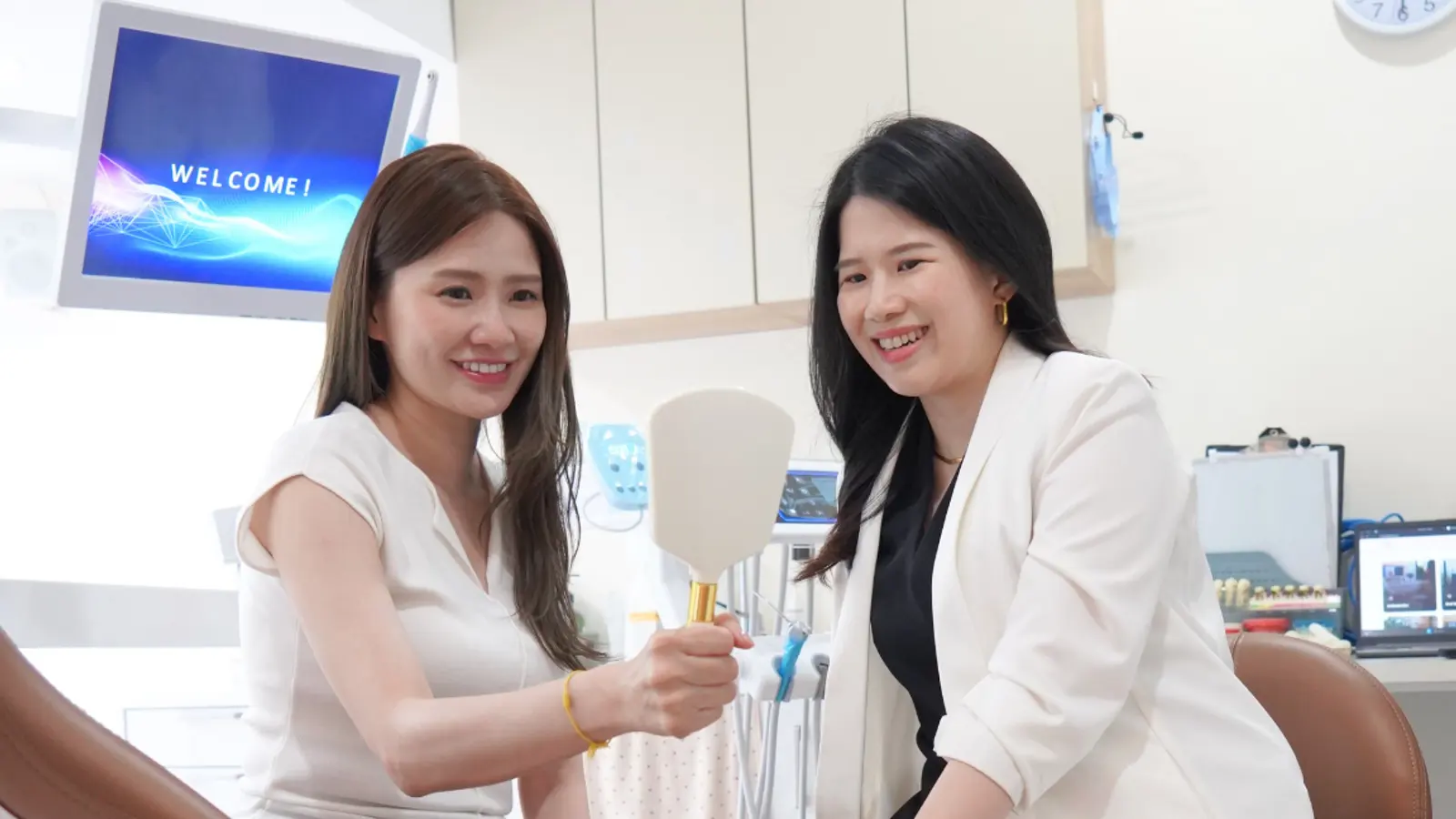
V Dental Clinic in SS2, Petaling Jaya provides denture with clear explanations, careful planning and follow-up at every step.
A detailed treatment plan and fee breakdown before treatment begins.
Strict sterilisation and hygiene protocols for every visit.
755+ Google reviews from our patients. Read them on Google.
Conveniently located in SS2, Petaling Jaya.
Before and after cases treated at our clinic, and what patients say on Google.
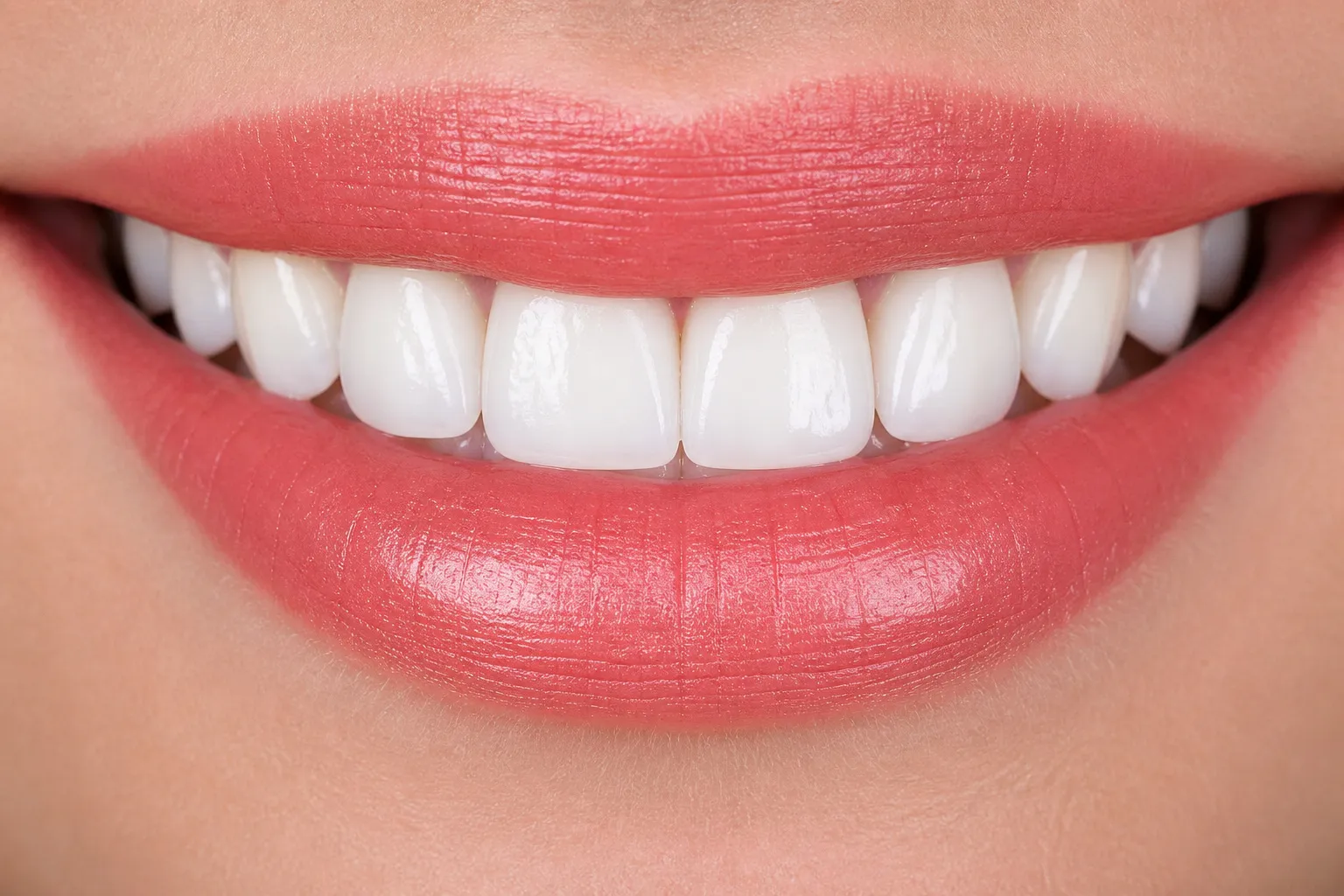
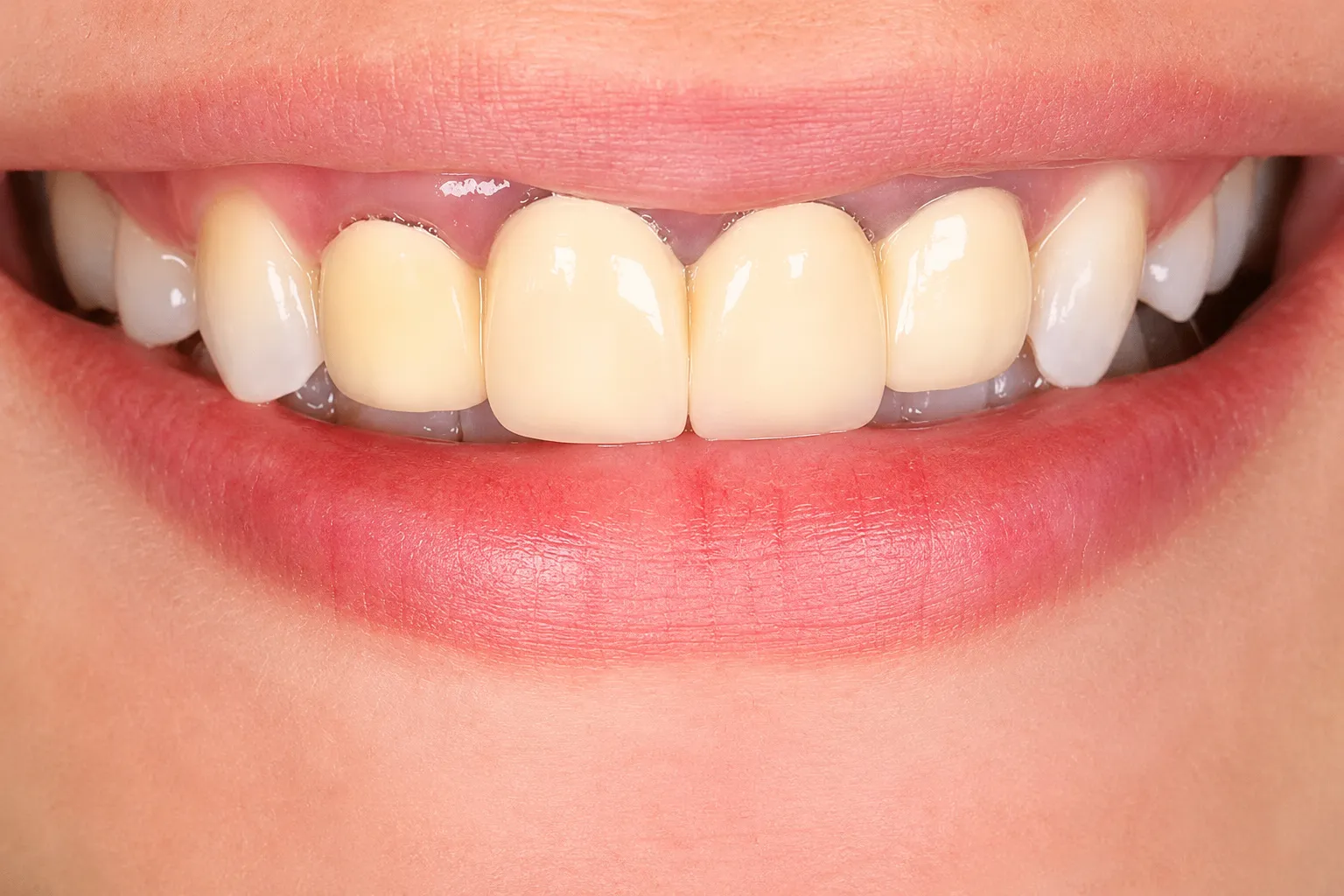
Replacing old PFM crowns with full porcelain crowns to restore aesthetics.
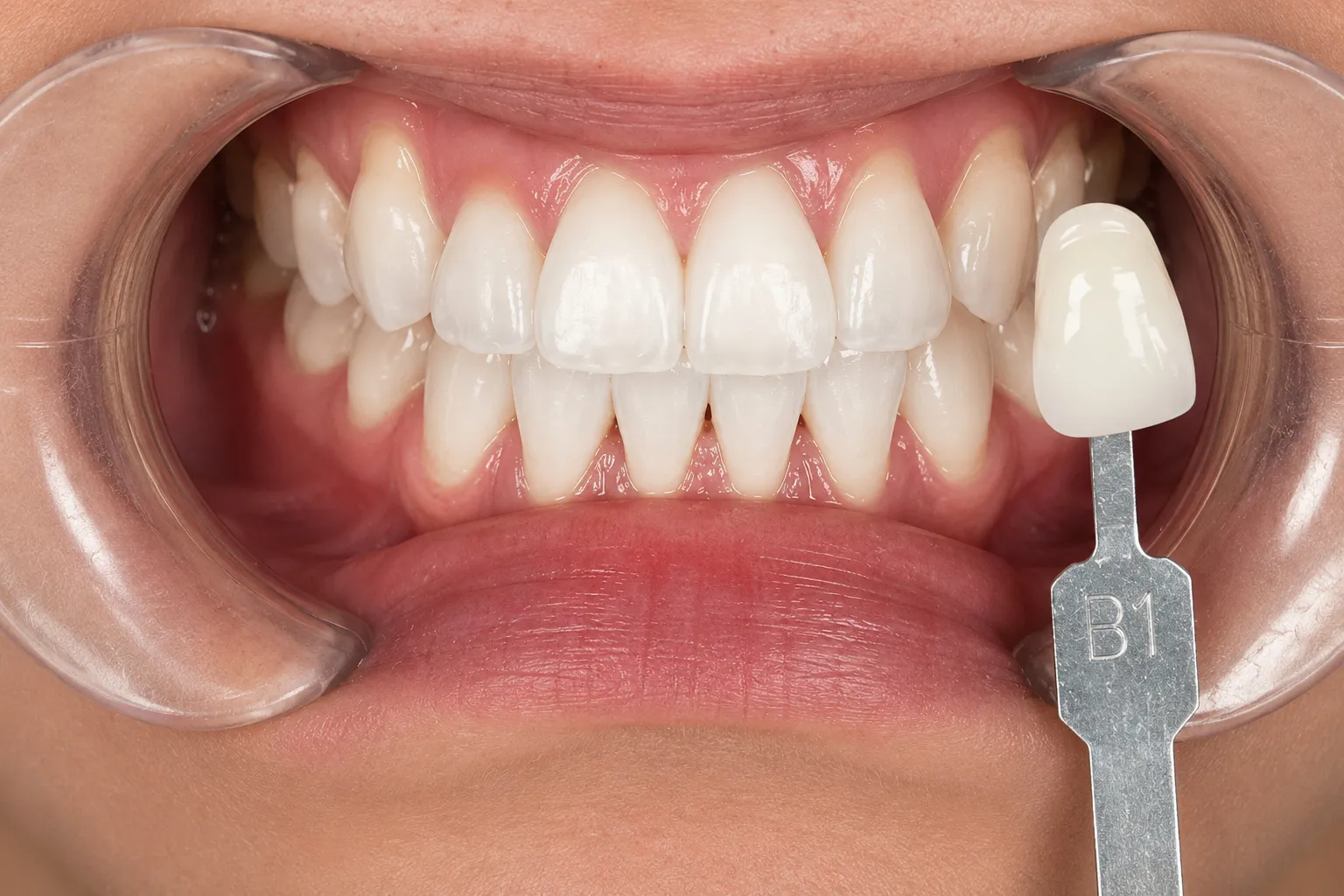
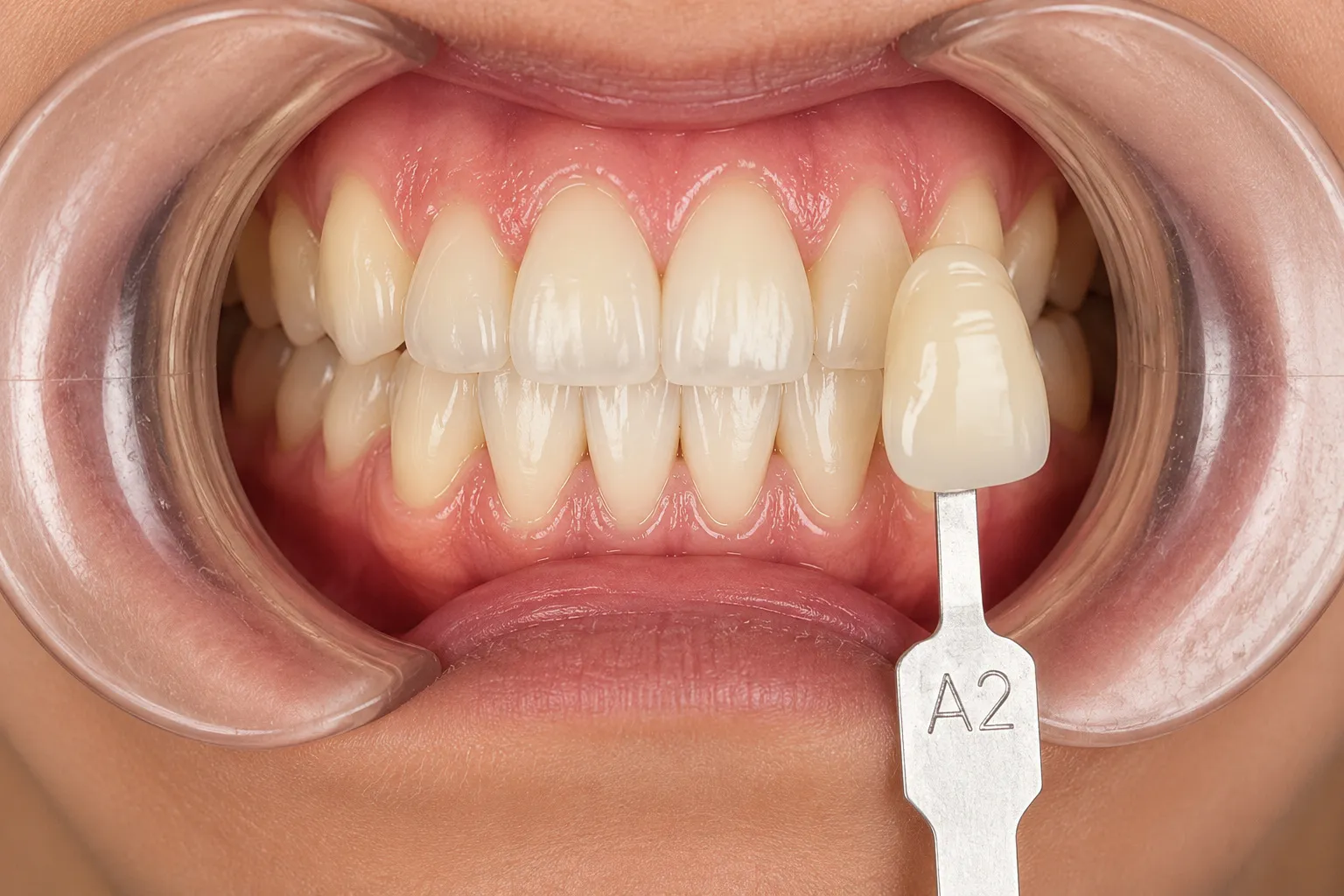
Smile brightened with professional in-office teeth whitening treatment.
out of 5 on Google
Based on 755+ reviews
Adnan
July 2026
Thank you,Dr Koh, for the excellent dental implant treatment.The whole process was well explained,smooth and comfortable.Im very pleased with the results and would definitely recommend this clinic to others
View on GoogleSummer Lee
June 2026
The doctor was very good, patient, and professional. I went for braces treatment and had a great experience. The doctor explained everything clearly and made me feel comfortable throughout the consultation. Highly recommended!
View on GoogleNick Koay Han Yann
June 2026
Recommended by one of my relatives, Dr Koh is very friendly and informative. Did my scaling and filling. No issue, had a good experience.
View on GoogleEverything you need to know about this treatment.
Acrylic dentures are the conventional option, rigid and repairable, with metal clasps on partial dentures. Flexible dentures are made from a thin nylon-type material with gum-coloured clasps, lighter and less visible, but harder to adjust or reline. Suction dentures are lower complete dentures made with a technique that seals the border against the gums for better stability.
Usually three to five visits over two to four weeks: impressions, bite registration, a try-in of the teeth in wax, and fitting. If teeth still need to be removed, an immediate denture can be made beforehand so you are not without teeth while the gums heal.
New dentures feel bulky at first and may affect speech for a few days. Most people adapt within two to four weeks. Sore spots are normal early on and are adjusted at review visits until the denture sits comfortably.
Remove them at night to rest the gums, brush them with a soft brush and denture cleaner rather than toothpaste, soak them in water or a cleaning solution overnight, and brush your gums, tongue and any remaining teeth every day.
About five to eight years. The gums and bone under a denture slowly shrink, so the fit loosens over time. Relining the denture restores the fit for a while before a new one is needed.
People who have lost all their lower teeth and find a conventional lower denture unstable. The technique depends on the shape of the gums and the muscles around them, so an assessment is needed to see whether a good seal can be achieved.
Often yes. Two to four implants can hold an overdenture that clips on and off, or more implants can support fixed teeth. The bone under a long-worn denture may have shrunk, so a CBCT scan is taken to see what is possible.
Treatments that commonly come up alongside this one, either as an alternative or as the step before or after.
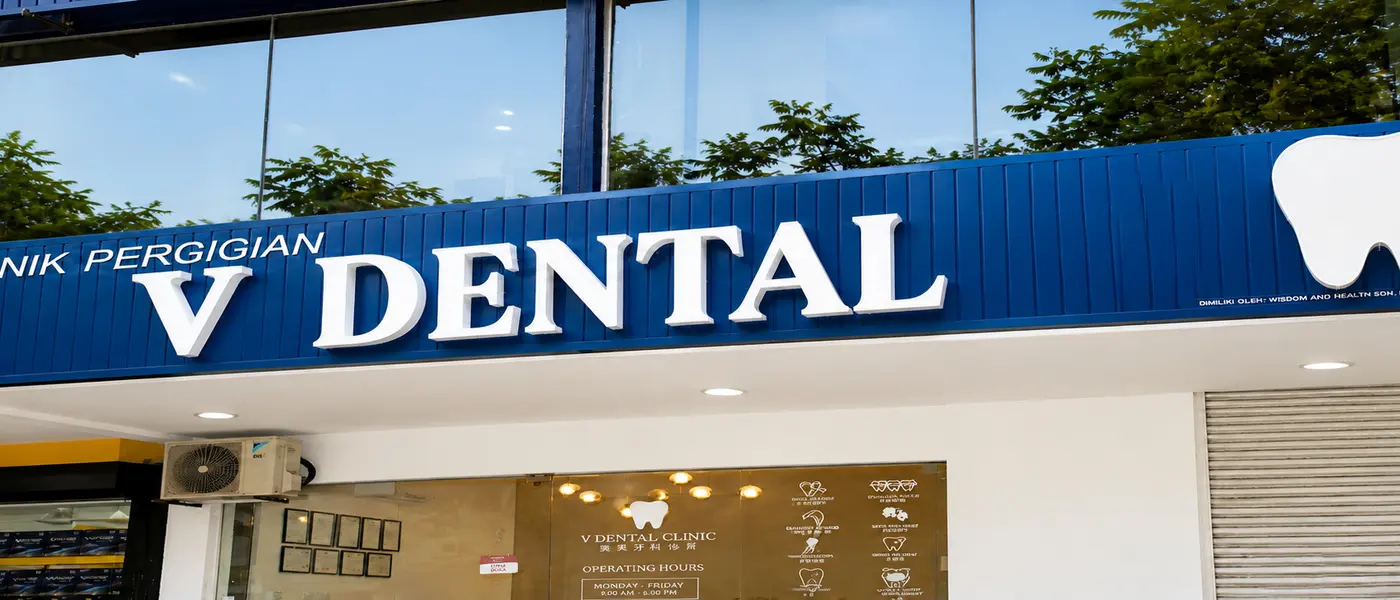
Walk-ins are welcome, but an appointment keeps your waiting time short.
Opening hours
Mon to Sat: 9:00 AM to 9:00 PM (MYT)
Sun: 9:00 AM to 6:00 PM (MYT)