Adnan
July 2026
Thank you,Dr Koh, for the excellent dental implant treatment.The whole process was well explained,smooth and comfortable.Im very pleased with the results and would definitely recommend this clinic to others
View on Google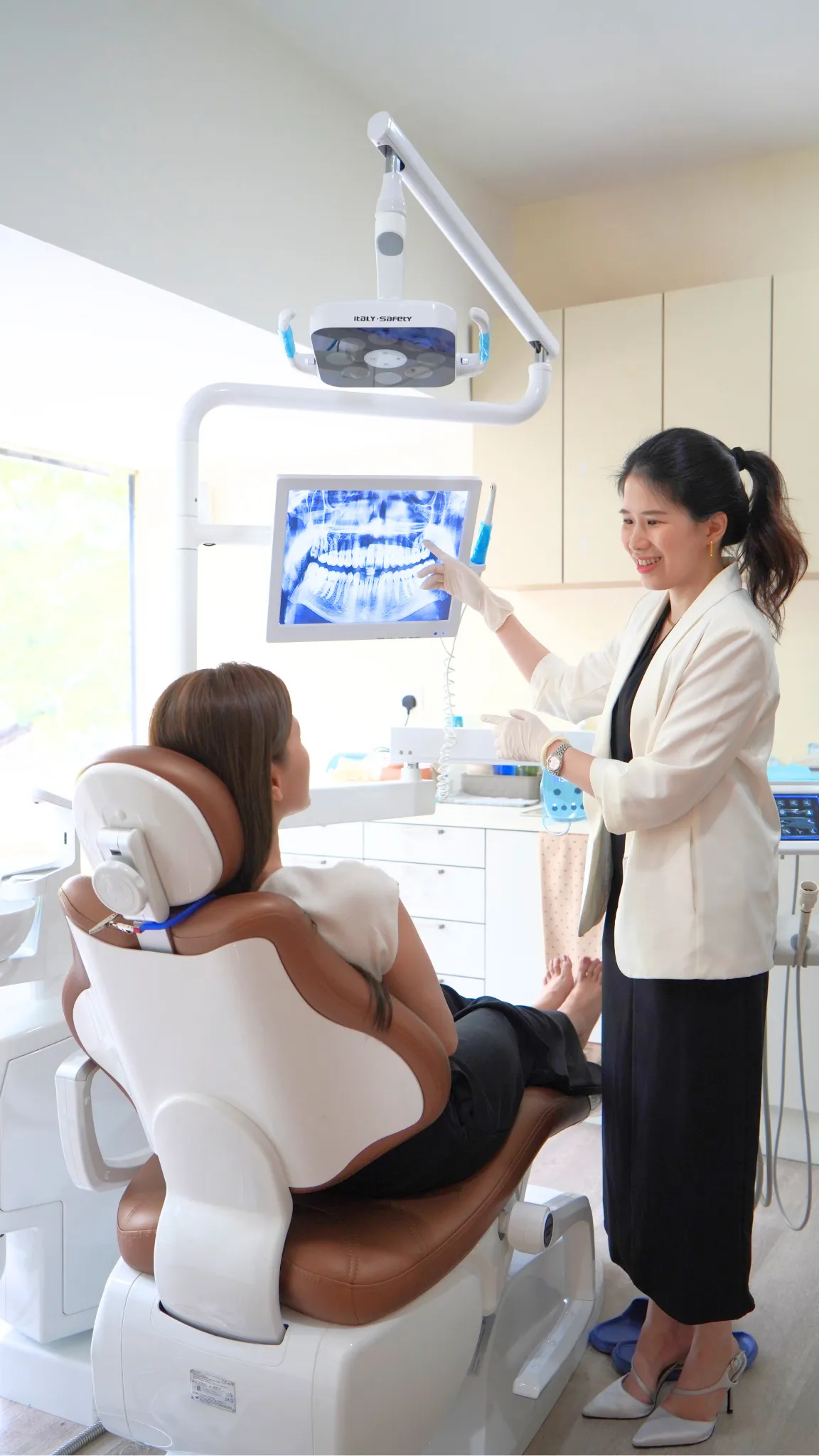
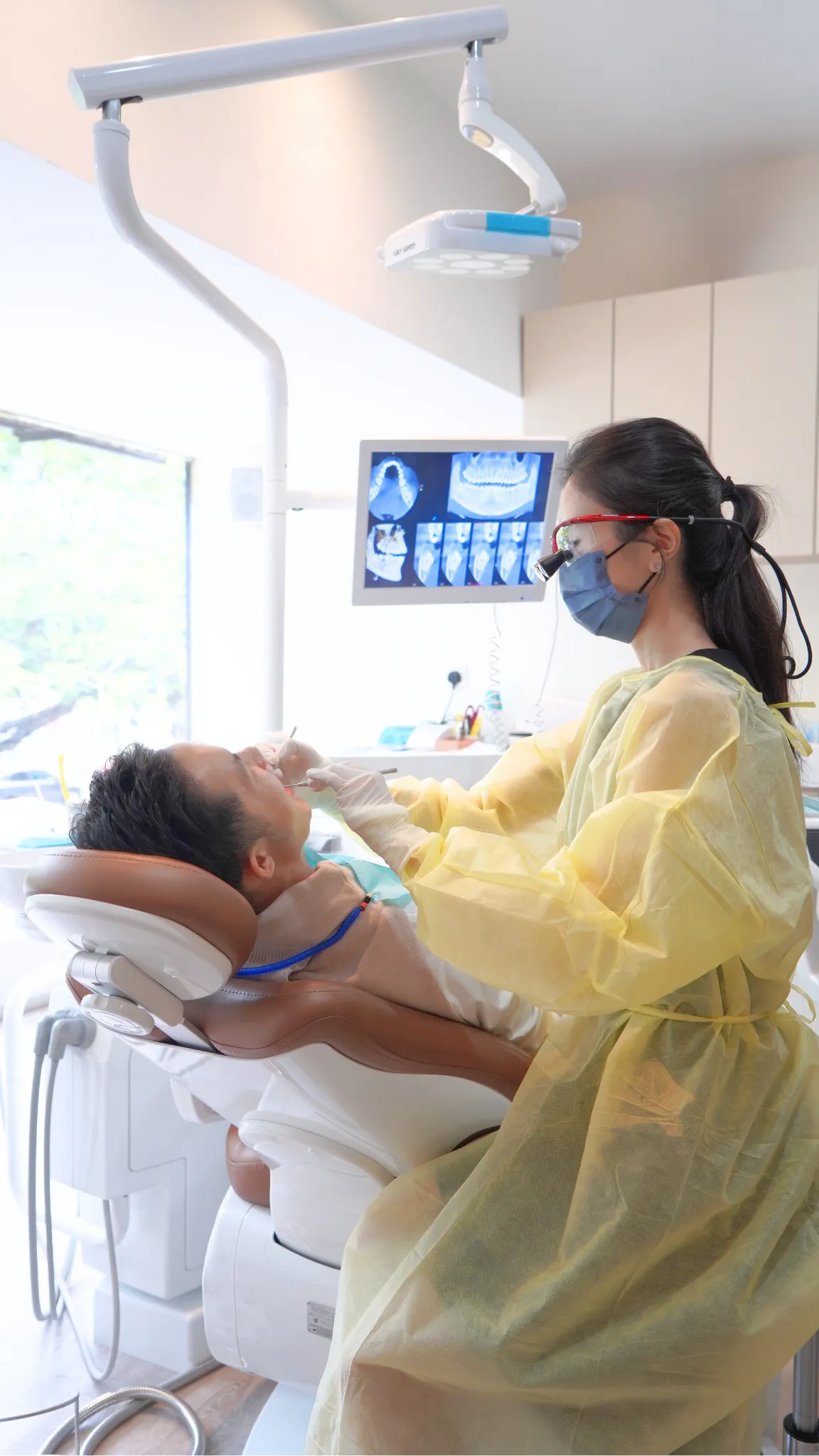
Replace one tooth, several teeth or a full arch with implants planned on a 3D CBCT scan. You get a written plan and fee breakdown before treatment starts, and payment plans are available.
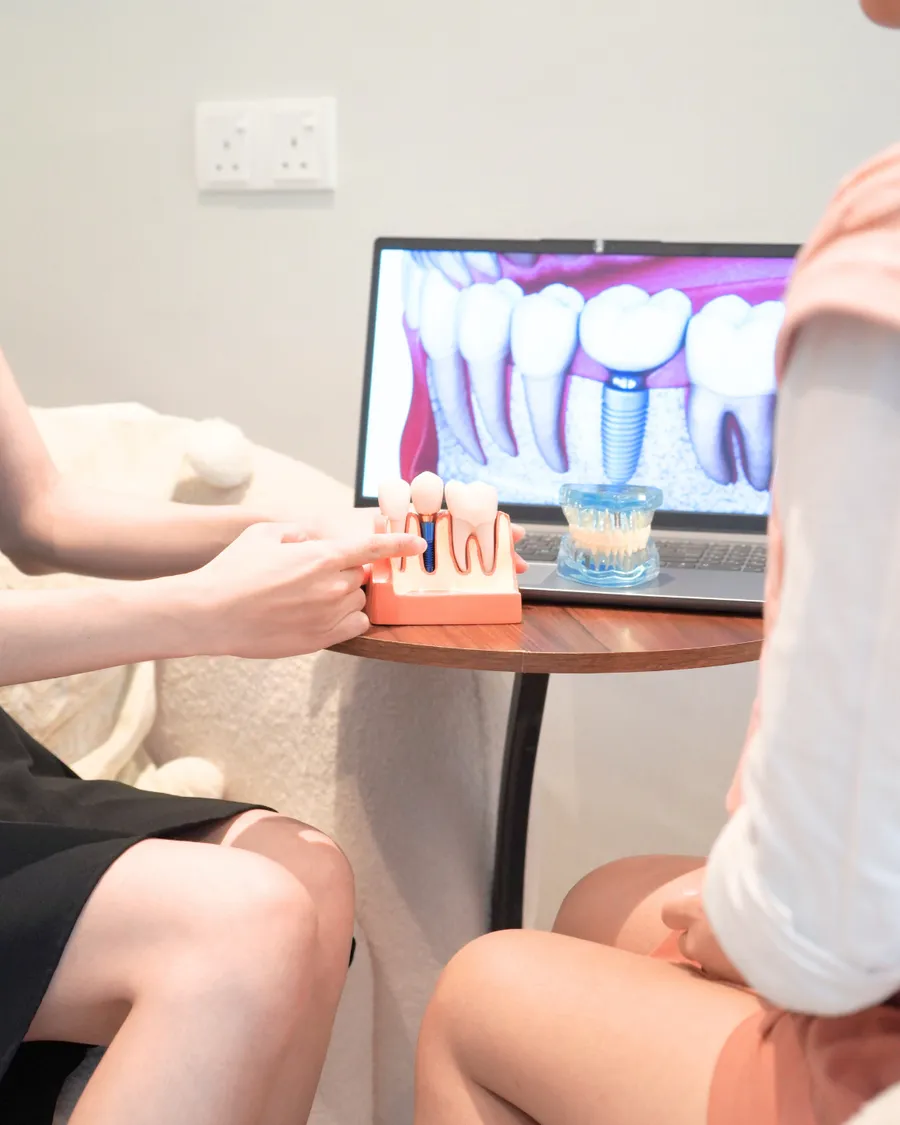
A dental implant is a small titanium post placed in the jawbone where a tooth root used to be. Once the bone has bonded to it, a crown, bridge or denture is fixed on top, replacing both the visible tooth and the root beneath it.
Typical time from implant placement to the final crown, longer when bone grafting is needed.
Bone, nerves and sinuses are mapped in 3D before anything is placed.
Stages, timeline and fee breakdown agreed before treatment begins.
Most adults with healthy gums and enough bone can have implants. A few conditions change the planning rather than rule it out.
Implants do not suit every patient. The only way to know for sure is a clinical examination and a 3D CBCT scan, both done in the clinic.
Every option is planned from your CBCT scan and explained before you decide.
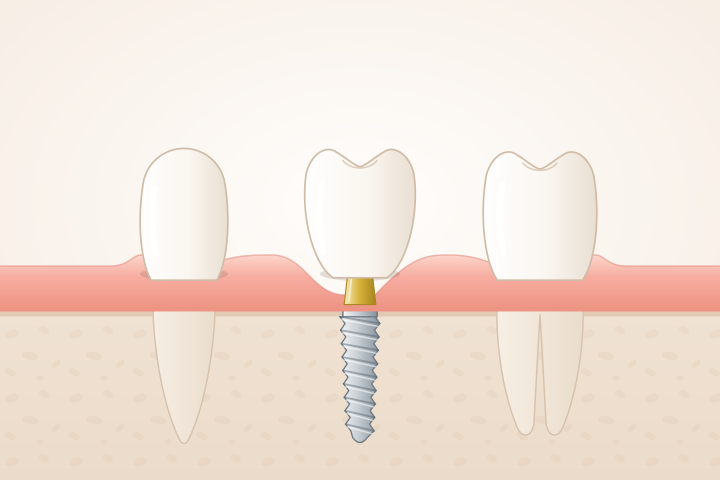
A long-term, natural-looking replacement for one missing tooth that leaves the neighbouring teeth untouched.
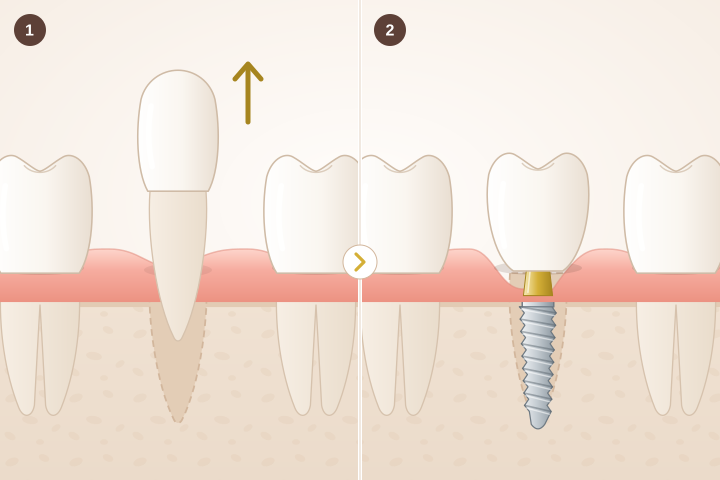
The failing tooth is removed and the implant placed in the same visit when the socket is healthy and the bone allows.
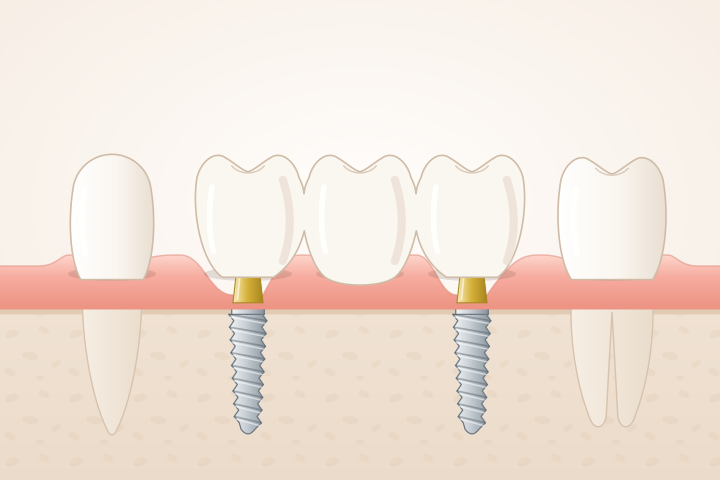
Two or more implants carry a bridge of several teeth without filing down healthy neighbours.
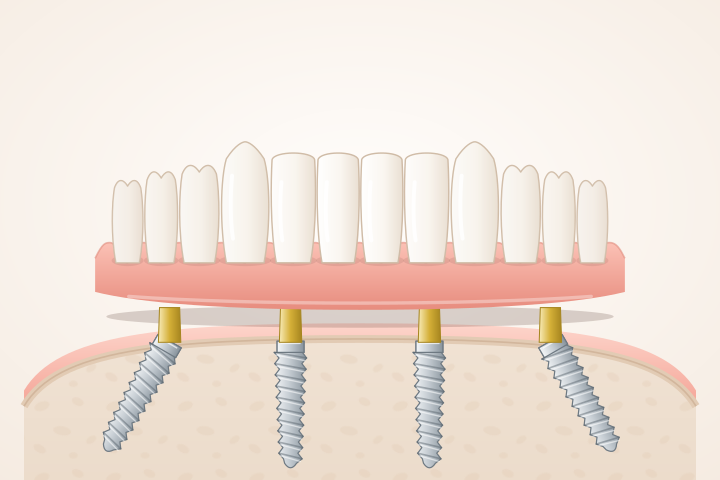
Four to six implants support a fixed bridge for a whole arch, or two to four implants hold a removable overdenture.
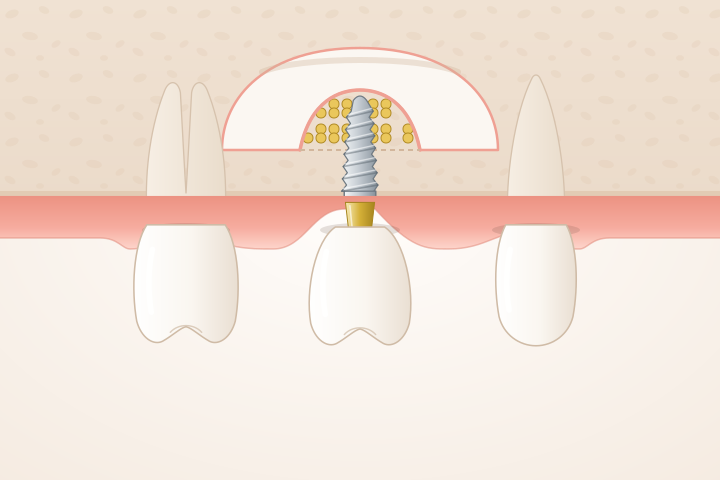
Rebuilds bone that has shrunk after tooth loss so the implant has a solid foundation.
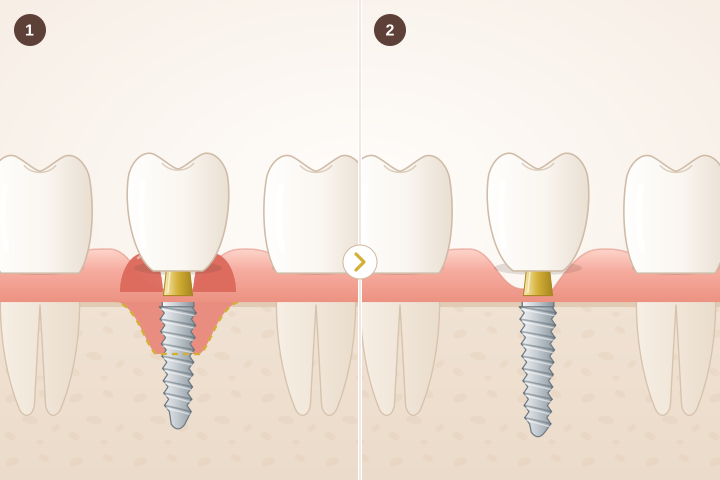
Assessment and treatment of problems from earlier implant work, including infection around an implant.
Six stages from the first visit to the final crown.
Typically 3 to 6 months from placement to crown, or 9 to 12 months when a separate bone graft is needed.
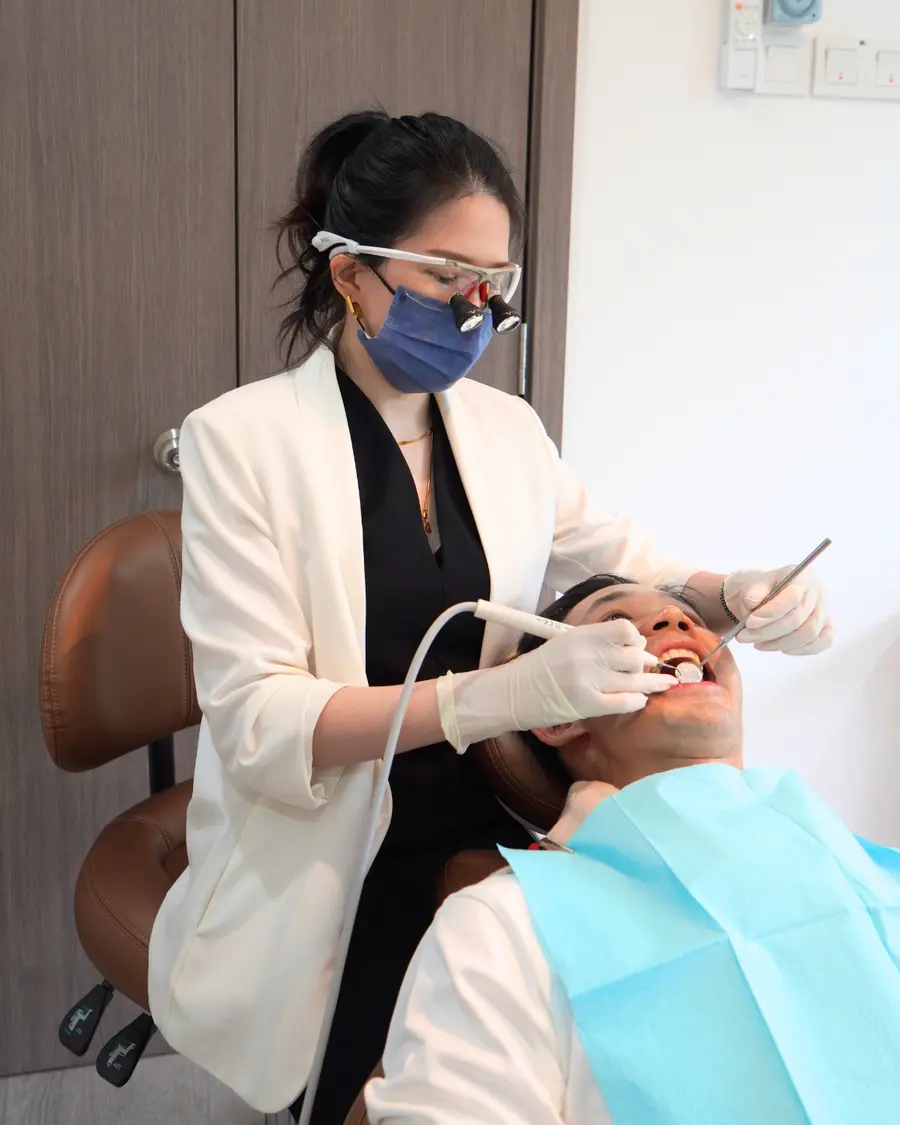
Examination, medical history and a 3D scan that shows bone, nerves and sinuses. You leave with a written plan, timeline and fee breakdown.
Failing teeth are removed and gum disease treated. Bone grafting or a sinus lift is done months before, or on the same day as, placement.
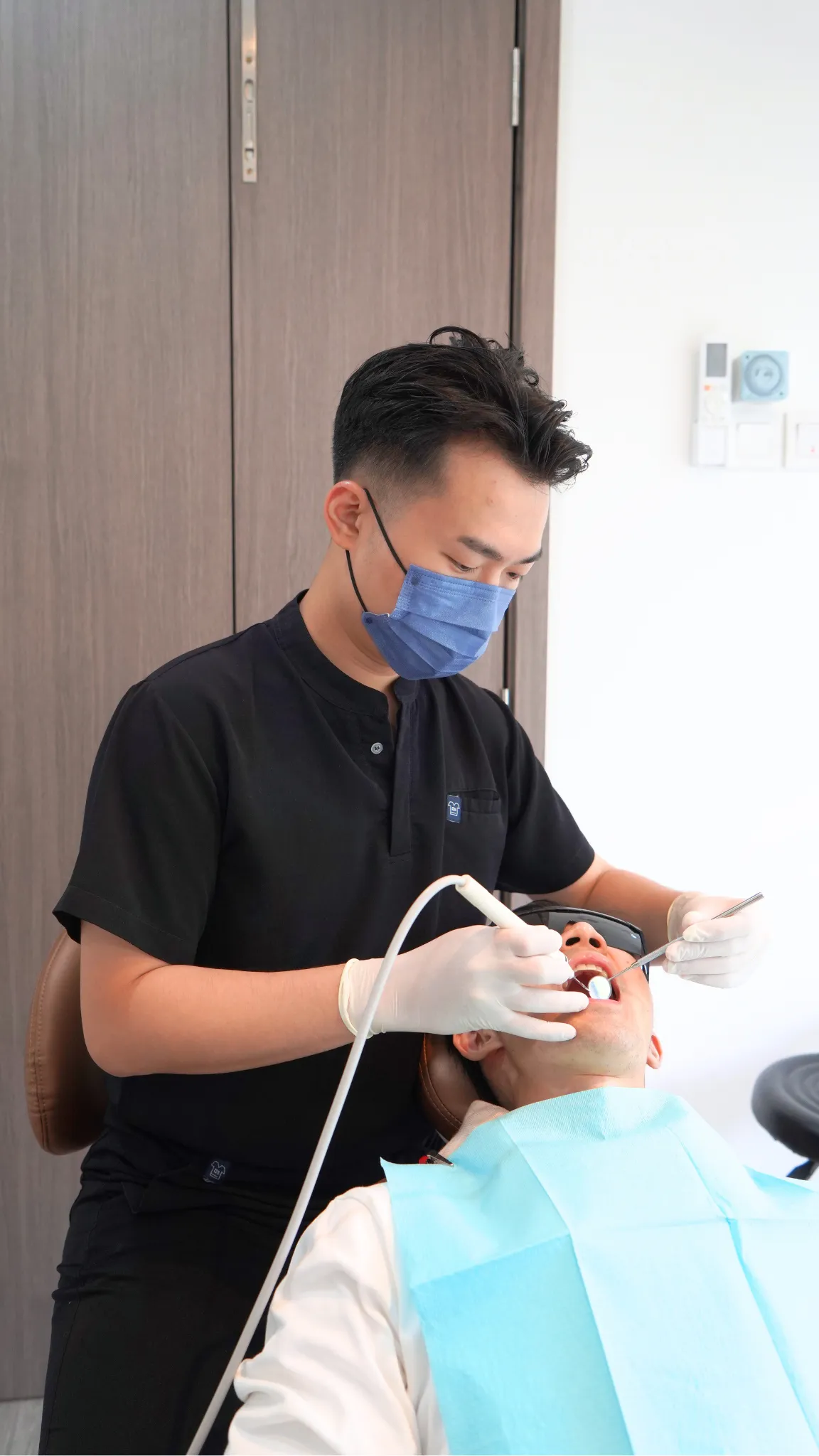
Under local anaesthesia the implant is placed through a small opening in the gum, usually in 60 to 90 minutes. Most people feel pressure rather than pain.
Over three to six months the bone bonds to the implant. A temporary tooth can usually be worn for appearance.
A connector is fitted and a digital scan taken so the laboratory can match the crown to your neighbouring teeth.
The crown is tried in, adjusted for bite and appearance, secured, and your first review is booked.
For many cases we place the implant through a surgical guide made from the CBCT plan. In selected cases a temporary crown kept out of the bite can be fitted the same day.
What most patients notice, phase by phase.
Some swelling, slight bleeding and discomfort. Painkillers, cold compresses and soft, cool food help. No smoking, alcohol or hot drinks.
Swelling peaks around day two or three, then settles. Stitches dissolve or come out after about a week.
The gum heals around the implant. Most people return to a normal diet, avoiding very hard food on that side.
Bone integration continues without any sensation. We check the implant clinically and with an X-ray before making the crown.
Call us if pain or swelling gets worse after day three, if bleeding or fever persists, if numbness does not fade, or if a temporary tooth comes loose.
Implant treatment is quoted per case. These six factors move the fee.
Established systems differ in price. Premium systems generally cost more.
A single implant with one crown is the simplest case. Bridges and full arches use more.
Each adds materials, surgical time and often a separate visit.
Zirconia, layered porcelain and metal-ceramic carry different laboratory costs.
Plus whether a surgical guide or temporary teeth are needed.
Revising a failed implant or working close to nerves and sinuses takes more planning.
Premium implant systems and zirconia restorations sit at the upper end. Your written quote is confirmed after the CBCT scan and examination.
An accurate quote is only possible after a CBCT scan and examination, because the scan decides whether grafting is needed and which implant suits the site. Payment plans are available, and whether your insurance or company panel covers implants depends on your policy.
Book a consultation or message us on WhatsApp. We explain your options and give a written plan before any treatment begins.
Each has its place. The right choice depends on the teeth next to the gap, the bone, your health and your budget.
| Dental implant | Tooth-supported bridge | Removable denture | |
|---|---|---|---|
| Neighbouring teeth | Untouched | Filed down to hold the bridge | Untouched, but clasps rest on them |
| Bone in the gap | Preserved by the implant | Continues to shrink under the bridge | Continues to shrink, so the denture loosens over time |
| Feel and chewing | Closest to a natural tooth | Fixed and comfortable | Less chewing force, may move |
| Cleaning | Brush and floss like a tooth, plus interdental brushes | Floss threaders under the bridge | Remove and clean daily |
| Treatment time | 3 to 6 months, longer with grafting | 2 to 3 weeks | 2 to 6 weeks |
| Typical lifespan | Long term with maintenance, the crown may be replaced over the years | About 10 to 15 years, then replaced | About 5 to 8 years, with relines in between as the gums shrink |
| Cost | Higher initial cost | Moderate | Lowest initial cost |
| Surgery | Yes, minor | No | No |
A bridge remains a sound option when the neighbouring teeth already carry large fillings or crowns, and a denture when several teeth are missing and surgery is not suitable.

Dr. Veronica Koh
Principal Dentist
Dr. Veronica Koh, known to patients as Dr. Veron, is the Principal Dentist at V Dental Clinic PJ, with postgraduate training in implant dentistry. She holds a Postgraduate Diploma in Implant Dentistry (PGDID) from International Medical University, is a Member of the Royal College of Surgeons of Edinburgh and of the International Team for Implantology (ITI), and has over 11 years of clinical experience, including 2.5 years in the Oral and Maxillofacial Surgery department at Hospital Sungai Buloh.
She lectures on implant dentistry and bone regeneration in the PGDID programme at International Medical University, and her clinical work covers implant placement, immediate implants, sinus augmentation, bone grafting and the management of failed implants.
Open any topic for the full explanation.
After a tooth is lost, the bone that held it shrinks, quickly in the first year and slowly afterwards. Gum disease and infection also destroy bone. When the CBCT scan shows there is not enough bone to hold an implant securely, we rebuild it first.
The graft material we use is EthOss, a fully synthetic beta tricalcium phosphate and calcium sulphate material. It contains nothing of animal or human origin, which matters to some patients for religious or personal reasons and is worth knowing before you ask. Dr. Koh is a Key Opinion Leader for EthOss in Malaysia and lectures on its use, which we state here rather than leave for you to find out. Grafting adds one healing phase to the timeline, so a case that needs a separate graft typically runs nine to twelve months from start to finish, or longer when a separate sinus lift is needed.
Two implants can support a bridge of three or four teeth without touching the neighbouring natural teeth. For a whole arch, four to six implants can carry a fixed bridge (often called All-on-4 or All-on-6), or two to four implants can hold a removable overdenture that clips on and off for cleaning.
Fixed full-arch bridges are usually fitted with a provisional bridge within days of surgery, when the implants are firm enough at surgery, and replaced with the final bridge after healing. Overdentures are the more economical option and are more stable than a conventional denture, at the cost of being removable. Which is appropriate depends on bone, budget, how easily you can clean, and what you want from the result.
Some conditions do not rule implants out but change the planning. Smoking slows healing and raises the risk of early implant failure and later bone loss around the implant, so we discuss stopping or pausing before and after surgery. Diabetes that is well controlled is compatible with implant treatment, while poorly controlled blood sugar affects healing, so we may ask for a recent HbA1c result and coordinate with your doctor. Osteoporosis medication (bisphosphonates and similar drugs), previous radiotherapy to the jaws, immune conditions and blood thinners need a medical review before surgery. Teeth grinding puts extra load on implants and usually calls for a night guard once the crown is fitted.
The only way to know whether an implant is right for you is a clinical examination and a 3D CBCT scan, which we take in the clinic.
We place four implant systems: Straumann from Switzerland, Anthogyr from France, and Osstem and MegaGen from South Korea. Anthogyr is part of the Straumann Group. All four are established systems with published clinical records and a supply of components in Malaysia, so an implant can be maintained or restored years later rather than becoming unserviceable when a part is discontinued.
They sit in two groups, and that is a large part of why a single implant with a crown spans a range rather than carrying one figure. Which group suits your case is a clinical decision made from the CBCT scan and the site, not a menu choice, and we will tell you which we are proposing and why before you agree to anything.
Dr. Koh is a Key Opinion Leader for Anthogyr and lectures at meetings sponsored by Straumann and Anthogyr. That is a commercial relationship and we state it here rather than leave you to find out. It does not change how a case is planned, and the system chosen for yours is named in your written treatment plan together with the reason for it. If you want to see the manufacturer's documentation, ask at the consultation and we will show you.
| Straumann and Anthogyr | Osstem and MegaGen | |
|---|---|---|
| Made in | Switzerland and France. Anthogyr is part of the Straumann Group | South Korea |
| Titanium | Grade 5 titanium alloy in selected Anthogyr components, which is stronger than commercially pure titanium and allows a narrower implant where space is tight | Grade 3 or Grade 4 commercially pure titanium, depending on the implant and the component |
| Published follow-up | Straumann implants have published clinical follow-up going back to the 1980s | Published clinical follow-up from the 2000s onwards, placed in large numbers internationally |
| Where we tend to use them | Complex cases, the front of the mouth where appearance matters most, and back teeth carrying heavy bite loads | Straightforward single tooth and multiple tooth cases where the bone is adequate |
| Where they sit in our fee range | The upper part of the range | The lower part of the range |
| Parts and servicing | Supported in Malaysia, with components available years after placement | Supported in Malaysia, with components available years after placement |
Implants are reviewed at the fitting of the crown, at six months, and then at your routine check-ups, where we check the gum, the bite, and the bone level on an X-ray at intervals. Complications are uncommon but real: a loose abutment screw, a chipped crown, gum inflammation around the implant (peri-implant mucositis), or bone loss around it (peri-implantitis). A loose screw or a chipped crown is usually straightforward to fix, and mucositis is reversible with cleaning. Peri-implantitis is harder to treat and may need surgery, which is why the review visits matter.
What happens if a complication arises, and how follow-up is arranged, is explained in your written treatment plan. Ask our team before treatment begins.
With this routine, implants can serve for many years. The crown is the part most likely to need replacement over time from normal wear.
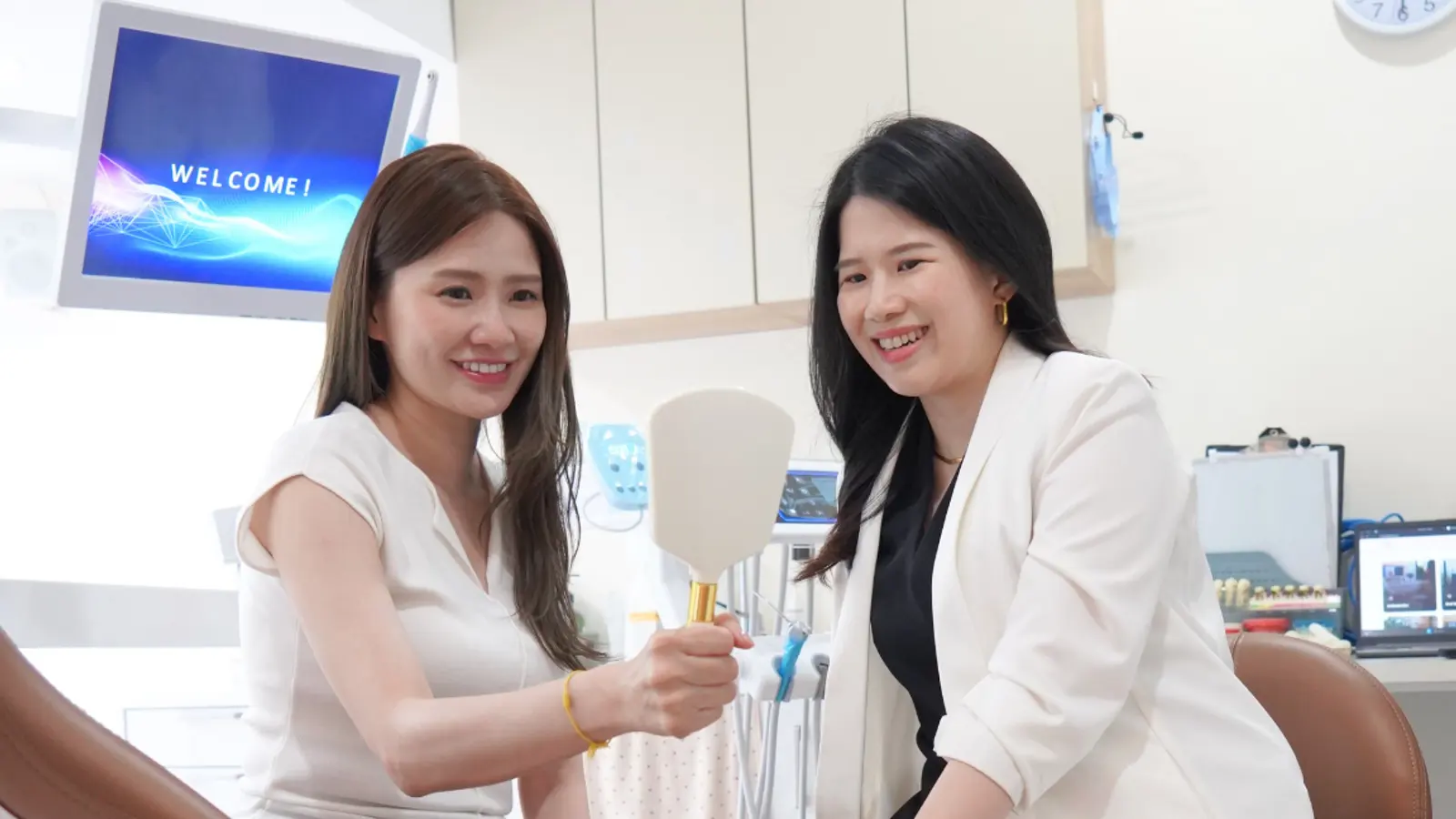
V Dental Clinic in SS2, Petaling Jaya provides implant solutions with clear explanations, careful planning and follow-up at every step.
A detailed treatment plan and fee breakdown before treatment begins.
Strict sterilisation and hygiene protocols for every visit.
755+ Google reviews from our patients. Read them on Google.
Conveniently located in SS2, Petaling Jaya.
Before and after cases treated at our clinic, and what patients say on Google.
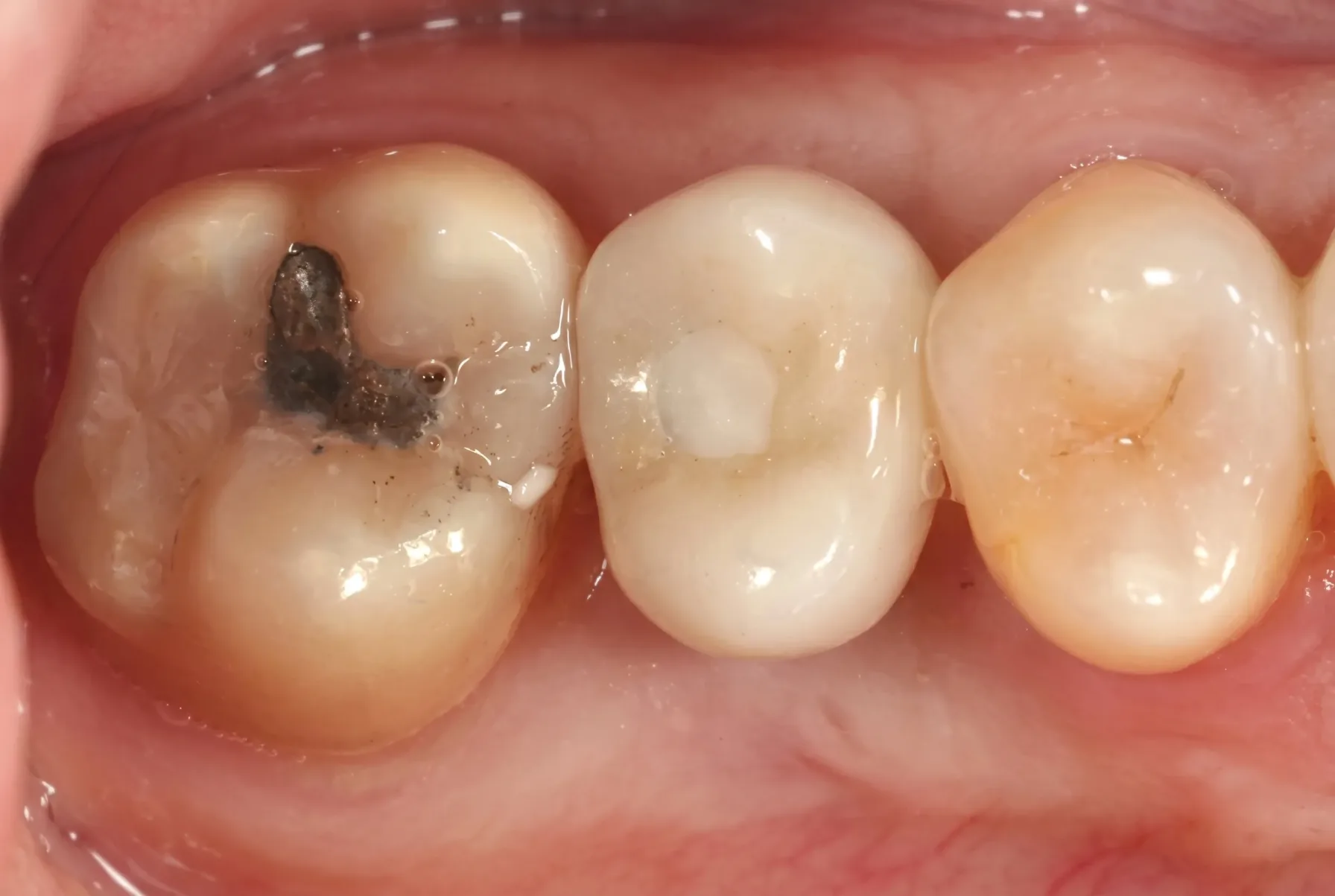
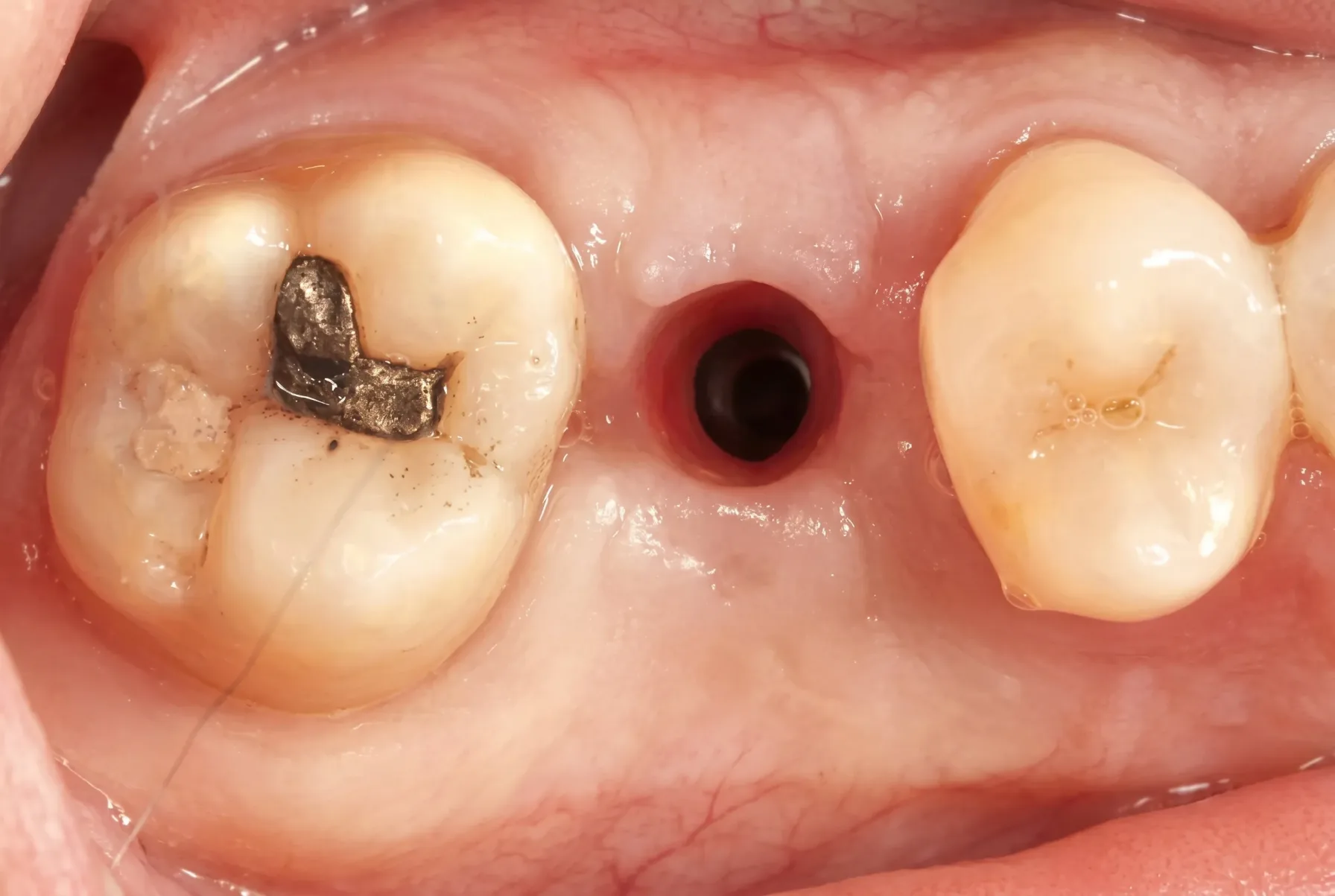
Dental implant to replace a missing tooth.
out of 5 on Google
Based on 755+ reviews
Adnan
July 2026
Thank you,Dr Koh, for the excellent dental implant treatment.The whole process was well explained,smooth and comfortable.Im very pleased with the results and would definitely recommend this clinic to others
View on GoogleSummer Lee
June 2026
The doctor was very good, patient, and professional. I went for braces treatment and had a great experience. The doctor explained everything clearly and made me feel comfortable throughout the consultation. Highly recommended!
View on GoogleNick Koay Han Yann
June 2026
Recommended by one of my relatives, Dr Koh is very friendly and informative. Did my scaling and filling. No issue, had a good experience.
View on GoogleEverything you need to know about this treatment.
The implant is placed under local anaesthesia, so you should feel pressure and vibration but not pain during the procedure. Afterwards, expect soreness and some swelling for two to three days, which the prescribed painkillers control for most people. Grafting and sinus lifts involve more swelling than a simple placement.
A straightforward single implant takes about three to six months from placement to final crown, because the bone needs that time to bond to the implant. If a tooth must be removed first or bone grafting is needed, allow nine to twelve months, or longer when a separate sinus lift is needed. An immediate implant reduces the number of surgeries but not the healing time.
An implant that has integrated and is kept clean can serve for many years, and long-term studies report high survival rates in healthy, well-maintained mouths. The crown on top wears like a natural tooth and may need replacing after 10 to 15 years. Smoking, gum disease and grinding are the main reasons implants fail early.
Yes, if your blood sugar is well controlled. Poorly controlled diabetes slows healing and raises the risk of infection, so we may ask for a recent HbA1c result and coordinate with your doctor before surgery.
Only if the CBCT scan shows the bone is too thin or too short to hold the implant. Many single implants, especially in the lower jaw, do not need grafting. Front upper teeth often need a small contour graft so the gum and bone keep their shape, and upper back teeth often need a sinus lift because the sinus sits close to the roots.
Fees depend on the implant system, the number of implants, whether grafting is needed and the crown material, so they are quoted per case. The section above on what determines your fee explains each factor. We give a written breakdown after a CBCT scan and examination, and payment plans are available.
An implant placed in the same visit as the extraction, when the socket is free of acute infection and there is enough bone to hold it firmly. It saves a separate surgery and helps preserve the shape of the gum. The final crown is still fitted after the bone has healed. In selected cases a temporary crown kept out of the bite can be worn for appearance in the meantime.
There is no upper age limit. What matters is bone, gum health and general health. Implants are deferred until the jaws have finished growing, usually in the late teens or early twenties, and are not placed in children.
A fixed full-arch bridge supported by four (sometimes six) implants, used when all the teeth in an arch are missing or failing. A provisional bridge is usually fitted within days of surgery when the implants are firm enough, and the final bridge after healing. It is an alternative to a full denture for people who want fixed teeth.
Early failure, when the bone does not bond to the implant, happens in a small number of cases and usually shows within the first months. The implant is removed, the site heals, and a new implant can often be placed later. Late problems are mostly gum and bone inflammation around the implant. Early inflammation is treated with cleaning. Established bone loss may need surgery, and in advanced cases the implant has to be removed.
Yes. Titanium is not magnetic, so implants are safe in an MRI scanner, though they can cause a small local blur on images of the jaw. Tell the radiographer you have them. They do not normally set off airport metal detectors.
Like a natural tooth: brush twice daily, and clean between the implant and its neighbours with floss or interdental brushes every day. Around bridges, a water flosser or floss threaders reach underneath. Six-monthly professional cleaning keeps the gum around the implant healthy.
Treatments that commonly come up alongside this one, either as an alternative or as the step before or after.
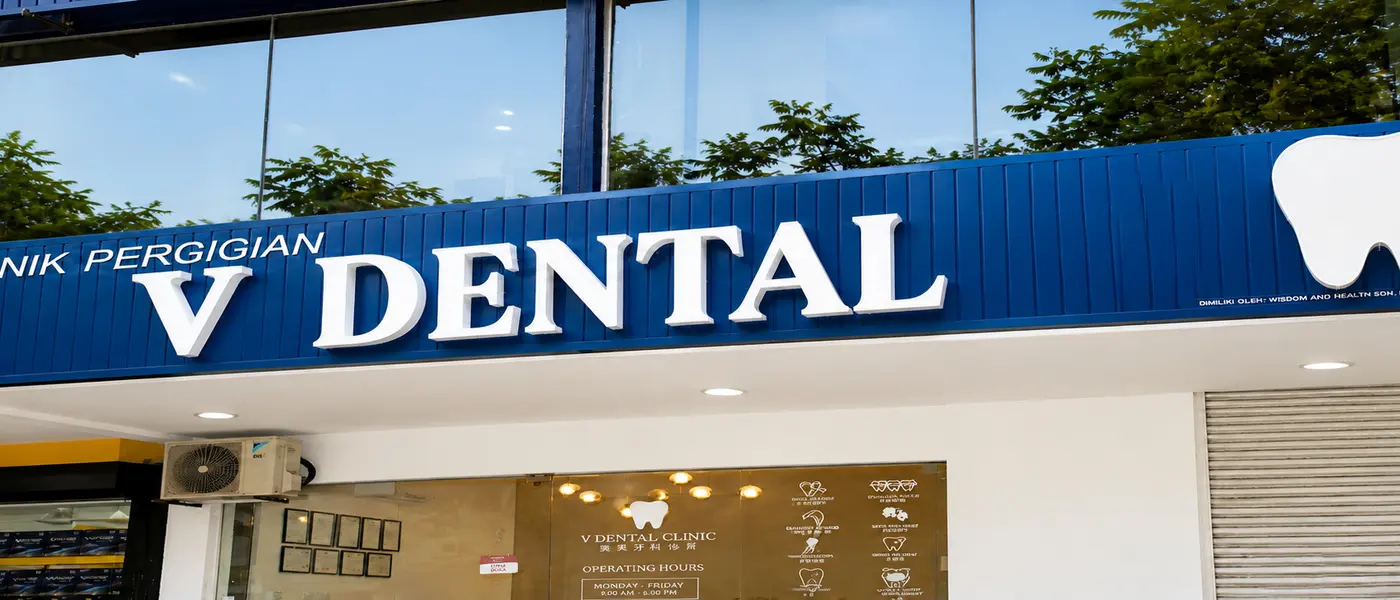
Walk-ins are welcome, but an appointment keeps your waiting time short.
Opening hours
Mon to Sat: 9:00 AM to 9:00 PM (MYT)
Sun: 9:00 AM to 6:00 PM (MYT)